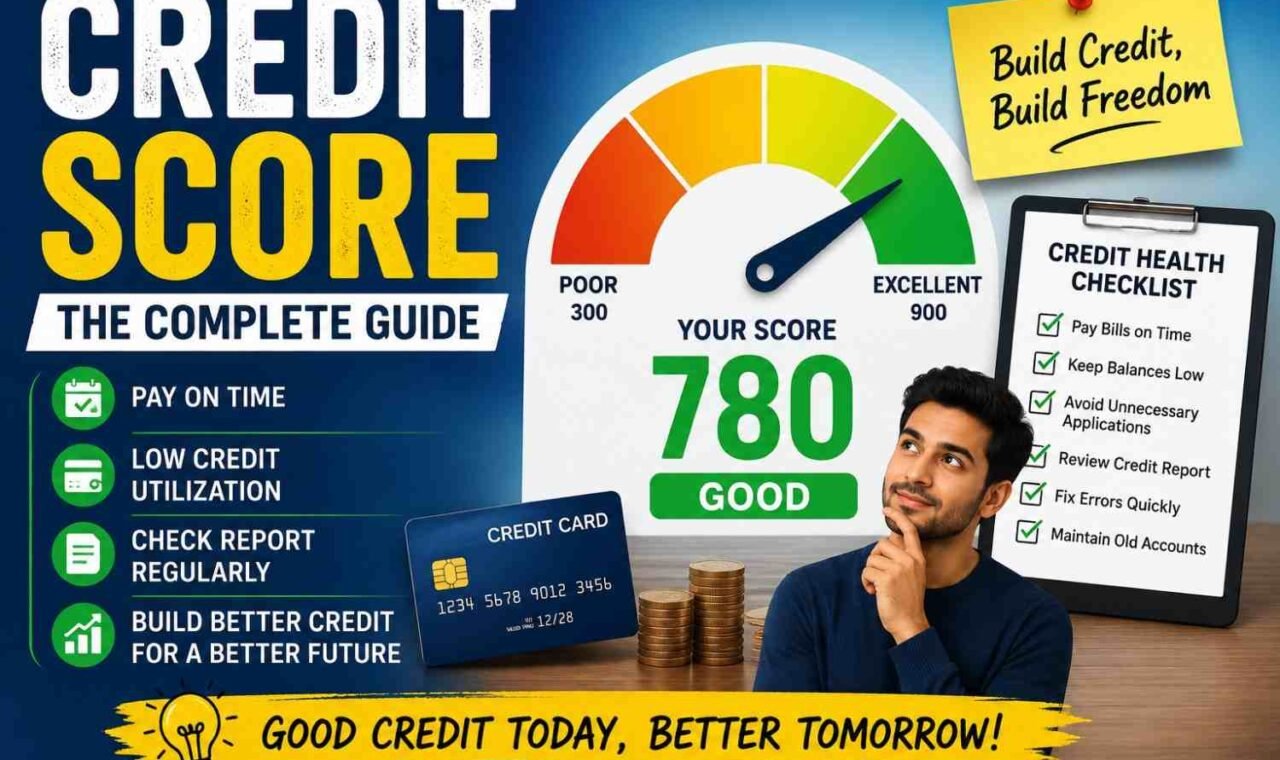
I used to think credit score matters only when we ask bank for loan. But no, it tells a small story about how you handled borrowed money before. In India, the CIBIL Score runs from 300 to 900, and lenders use this history while checking loan or credit-card applications.
But here one confusion comes. Good CIBIL score does not mean you are rich. Your salary, savings, bank balance or net worth is different thing. You may earn big money and still have poor credit habits. Another person may have less income, but pays every EMI properly.
And even high score never gives sure loan approval. Bank still checks income, existing debts and its own lending rules.
Also, don’t fear every small score fall. Sometimes credit data changes as accounts and balances update.
Credit monitoring is now very common too. By December 2025, 183 million Indians were self-monitoring their CIBIL Score.
So here, we will not chase numbers blindly. We will find what changed, why it happened, and what you can actually fix.
Credit Score Basics: CIBIL, Credit Reports and Score Ranges
What Is a Credit Score?
A credit score is just one number, but banks look at it like a small warning light. It tells them how you handled borrowed money before. In India, a CIBIL Score normally sits between 300 and 900. Higher score usually means lower credit risk.
But one thing many people miss. Your score is not your full money life.
You may have 800 score and still get loan rejected because income is low, too many EMIs running, or bank policy not matching you. I have seen people worry only about score, while actual problem sitting somewhere else.
What Is a CIBIL Score?
CIBIL Score comes from TransUnion CIBIL, one of the Credit Information Companies operating in India. Banks, NBFCs and other lenders send borrower account data to credit bureaus. CIBIL uses that credit history to prepare your report and score.
For individuals, we usually talk about CIBIL Score. For businesses, CIBIL also has CIBIL Rank, which is a different thing.
What Is a Good CIBIL Score?
People ask this again and again.
| Score | Simple Meaning |
|---|---|
| 750+ | Usually viewed strong |
| Around 700 | Fair to good |
| Around 650 | May make approval harder |
| Around 600 | Higher lender risk |
| 780–850 | Strong profile, but not magic |
Yes, CIBIL score can go up to 900. Still, 850 does not mean every bank must approve you. A lender checks more than one number.
Credit Score vs Credit Report
Think this way. Score is summary. Report is the story.
Your credit report may show loans, credit cards, balances, repayment record, enquiries, account ownership and personal details. So when score suddenly drops, I would first open the report, not guess.
Moreover, remember which is the best credit card in India to add value to your credit score.
Why Different Apps Show Different Scores
One app may show CIBIL. Another may show Experian, Equifax or CRIF High Mark. Their data, scoring model and update date can differ.
So two scores can be different and still both be real.
Before comparing, first check which credit bureau made that score and when it was updated.
How Credit Scores Are Actually Built
Your credit score is not made from one thing. It is more like your borrowing story. What you borrowed, how you paid, how much debt still sitting there, and how often you went asking for new credit. CIBIL says its score mainly looks at payment history, credit utilization, age of credit and enquiries.
The Factors That Influence Your Credit Score
Payment history comes first in real life. You take a home loan, bike loan, personal loan or credit card, then payment behavior starts speaking. Paying EMIs and card bills on time helps. Late payment, missed EMI and delinquency can hurt your CIBIL profile.
DPD, or Days Past Due, also gives clue about delayed payments. When I look at a credit report, this is one area I would not ignore.
Then comes credit utilization. Simple meaning:
Credit used ÷ total revolving credit available × 100
Say your total card limit is ₹1 lakh and ₹20,000 is being used. Utilization is 20%.
Lower usage generally looks healthier because very high utilization can show you may be depending heavily on borrowed money. But don’t treat 30% utilization like some magic wall. Going from 29% to 31% does not suddenly make you a bad borrower.
Your credit age matters too. An old card with clean payment history shows how you handled credit over time. Closing old accounts may change that picture; CIBIL itself says length of credit history matters.
There is also credit mix—cards are revolving credit, while home, car or personal loans are installment credit. A healthy mix can help, but please don’t take a useless loan and pay interest only for “credit mix.”
New credit matters. Too many hard enquiries, many applications in short time, and several new accounts can make your profile look credit hungry.
And finally, look at total exposure. Five active loans, large card balances and heavy monthly debt can tell a different story than one small card balance.
Important: CIBIL does not give us a simple public formula where we can say, “this action adds exactly 18 points.” Anyone promising exact score points is mostly guessing.
Your salary does not directly create CIBIL points. PAN and Aadhaar mainly help identify you. Debit-card spending, SIPs, demat investments, insurance premiums and money sitting in your bank account are also not normal consumer credit repayment history. Your score is mainly about how you handle borrowed credit, not how rich your bank account looks.
Credit Utilization: One of the Fastest Things You Can Control
Credit utilization sound little technical. But it is simple thing.
It means how much credit card limit you already using.
Say your card limit is ₹1,00,000. Your current reported balance is ₹20,000.
₹20,000 ÷ ₹1,00,000 × 100 = 20% credit utilization.
Higher utilization can make you look more stretched with credit. CIBIL itself advises keeping utilization low for a better credit profile.
Should Credit Utilization Stay Below 30%?
You probably heard this many times—“Never cross 30%.”
I don’t see 30% like some danger wall. At 29% everything is not suddenly perfect, and 31% does not mean credit disaster. CIBIL calls around 30% a healthy guideline, while lower utilization generally looks better.
If one card has ₹1 lakh limit and you use ₹90,000, that card is heavily used. Even when you have other cards sitting empty, this is something worth watching.
Under 10% can look stronger in some scoring systems, but keeping cards at exactly 0% every month brings no special prize.
A higher credit limit may lower your ratio if your spending stays same. Limit cut can do opposite. And rewards points? Nice, but not nice when we spend extra just for points.
Statement Date vs Due Date
This part confused me first.
Due date matters for paying on time.
Statement/reporting balance may be what reaches the credit bureau.
So paying some balance before statement generation can reduce what gets reported. Don’t turn this into daily maths though.
Paid already but utilization still showing high? Give reporting little time. CIBIL says lenders normally report recent payments within 30 days.
For deeper examples, see our Complete Guide to Credit Utilization Ratio.
Why Your Credit Score Suddenly Dropped
You check your credit score one morning. It was 780 last month. Now 742.
First thought comes, what did I do wrong?
Maybe nothing big. Credit score can move even when you feel your money habits stayed same. I have seen this confusion many times. People pay bills, avoid late EMI, still score goes down. That is where checking the full credit report become more useful than staring at one number.
Seven Common Reasons for a Credit-Score Drop
Your score may fall because of:
- Missed or late payment on loan EMI or credit card.
- Higher credit utilization, like using ₹80,000 from ₹1 lakh card limit.
- New hard enquiry after applying for loan or card.
- New credit account, which changes your credit history.
- Card limit reduction, making utilization suddenly higher.
- Loan payoff or account closure, changing your credit mix.
- Wrong or fraudulent reporting, including unknown loans or enquiries.
“I Paid Everything on Time—Why Did My Score Drop?”
This question worries many people.
On-time payment is very important, but it is not the only thing inside your credit profile. Maybe your card balance increased before lender reported it. Maybe you applied for another card. Maybe an old account closed. Sometimes lender sends fresh data and your score reacts.
So don’t guess.
Open your credit report. Compare balances, enquiries, account status, and payment history. If something looks strange, contact lender and dispute wrong information.
Why Score Can Drop After Paying Off a Loan
This feels unfair.
You finish a car loan after years of EMI. Good feeling. Then score drops.
Closing an installment loan can change the shape of your credit profile. That short drop does not mean paying debt was a bad move.
I would not take another loan just to bring few score points back. Paying interest only for score is costly thinking.
Better move: check the report, make sure loan says closed, keep card balances manageable, pay everything on time, and give your credit history some time to settle.
How to Improve Your Credit Score — Practical 30-Day, 90-Day and 6-Month Plan
When credit score is low, many people first think, “How fast I can make it 750?” I also see people searching how to increase CIBIL score by 100 points. But credit score not work like exam marks. You cannot add 100 points by doing one trick. What you can do is clean the problems, then give your credit history some good months.
Step 1 — Download and Audit Your Credit Report
First, see what is actually wrong.
Check your name and personal details. Then look each loan and credit card. Search for unknown accounts, duplicate loans, wrong outstanding amount, closed loan still showing active, false late payment, unauthorized enquiry, or “settled” and “written-off” status.
CIBIL itself says payment history, credit utilization, age of credit and enquiries are major parts used in its score.
If data is wrong, don’t simply wait. Raise dispute and keep your payment proof, NOC and closure letter.
Step 2 — Bring Overdue Accounts Current
Now look at real unpaid money.
An overdue EMI comes first. Then past-due credit card, bounced auto-debit, and small leftover balance which we sometimes forget after loan closing.
Late and missed payments can hurt the CIBIL Score.
I would not chase some “credit repair trick” while an EMI is still unpaid. Fix the leak first.
Step 3 — Reduce Credit Card Balances
Suppose your card limit is ₹1,00,000 and balance is ₹80,000. You are using a big part of available credit.
Try bringing it down instead of spending more just because limit exists. CIBIL advises keeping credit utilization low and within credit limits.
Step 4 — Stop Applying Everywhere
One loan rejection makes people nervous.
Then they apply to four more lenders in same week.
Not good idea. New credit enquiries are among factors considered in the CIBIL Score. Find why rejection happened first.
Step 5 — Protect Every Future Payment
Use autopay. Keep calendar reminder also. Autopay can fail.
I like one more safety: keep some EMI money untouched in bank. A small emergency EMI buffer saves trouble when salary gets late or sudden expense comes.
Step 6 — Don’t Close Good Old Credit Without Reason
An old healthy account can be useful. But please don’t keep an expensive loan, risky card, or unwanted debt only because somebody told you score will fall.
Your 30-Day, 90-Day and 6-Month Plan
| Time | Main work |
|---|---|
| First 30 days | Audit report, dispute clear errors, pay overdue dues, reduce heavy card balances |
| By 90 days | Never miss payment, avoid unnecessary enquiries, allow lower balances to get reported |
| By 6 months | Build clean payment history, monitor report, finish disputes, reduce unstable debt |
Can a 600 CIBIL score become 750? Possible for some people, but nobody can promise when.
Can your score rise 100 points? It can happen, but again no fixed rule. TransUnion CIBIL reported in March 2026 that nearly 45% of consumers who monitored their score improved it within six months. That does not mean every person gained the same points.
Your recovery depends on what damaged your credit in first place.
High card balance may improve differently from missed EMIs. A wrong account needs correction. A thin credit history simply needs time.
So don’t fight for points every morning. Fix what is wrong, pay what is due, keep debt under control, and let your credit history slowly tell a better story.
Missed EMIs, Late Payments and DPD Explained
A missed EMI can look small today. Maybe ₹2,000, maybe one forgotten payment. But inside your CIBIL report, that delay can leave a mark.
What Is DPD?
DPD means Days Past Due. It tells how many days your loan or credit payment stayed unpaid after due date. If CIBIL shows 000, payment was made as per due date. A number like 050 means payment was late by 50 days.
You may also see these words:
| Code | Simple meaning |
|---|---|
| 000 | No late payment |
| STD | Standard account |
| SUB | Payment situation crossed 90 days |
| DBT | Account stayed Sub-Standard for 12 months |
| LSS | Loss identified, amount seen as uncollectible |
CIBIL says values other than 000 or STD can be viewed negatively.
What Happens After One Missed EMI?
Do not sit and calculate, “Maybe my score lose 20 points?” Nobody can tell exact point fall.
Pay the missed EMI first.
Then call lender. Ask whether late payment already reported. Keep payment receipt also.
I would check the CIBIL report again after lender reporting happens. Banks and credit institutions generally submit information within 30–45 days, so your latest payment may not appear immediately.
Auto-Debit Failed—What Should You Do?
Sometimes problem is not careless spending. Bank balance was there, but debit failed. Or balance was short. Card payment got reversed. Even ₹1 or tiny overdue can remain after final EMI.
My simple order is:
Failure → proof → lender call → pay due → watch report → dispute wrong entry.
Save screenshots, bank statement and complaint number. If CIBIL data is wrong, raise dispute instead of just hoping it disappear. CIBIL says it cannot change lender-reported records without confirmation from that credit institution.
For deeper recovery steps, read Late Payment and DPD: Complete CIBIL Recovery Guide.
Settled, Written-Off and Closed Accounts: What They Really Mean
These three words look small inside a credit report. But they can change how a lender sees you.
Closed. Settled. Written-off.
They are not same.
A closed account usually means you paid the full loan or credit card dues, and lender closed that account. This is the clean ending most borrowers want.
A settled account is different. Maybe you had money problem. EMI stopped. Calls came. After some talks, lender accepted less money than what you really owed. Account may stop collection, but your CIBIL report can show “settled.” Another lender may think, “This borrower did not pay full agreed amount.”
Then comes written-off. This word scares many people. It normally means lender treated the loan as serious bad debt in their books after long non-payment. But one thing people misunderstand: written-off does not always mean, “Loan gone. I don’t need pay.”
I have seen people celebrate too early after settlement. Later home loan time, they understand the problem.
Can “Settled” Status Be Changed?
Sometimes, yes. But no shortcut magic.
First contact your lender. Ask how much contractual balance is still unpaid. Get answer in writing if possible.
Then:
- Pay remaining amount if lender allows.
- Ask for loan closure letter or NOC.
- Request lender to update correct account status with credit bureau.
- Wait for reporting cycle.
- Check fresh CIBIL report again.
If lender says they updated it but report still wrong, then dispute the incorrect information.
Can Negative Information Simply Be Deleted?
This is where scams enter.
If information is wrong, you can dispute it.
If information is true, no genuine company can simply press one button and erase your past.
So be careful when somebody says:
“Pay us and we will increase your CIBIL by 150 points in 15 days.”
That is a red flag.
You can repair credit. Slowly, yes. Pay dues, fix wrong data, keep EMI clean, use credit carefully.
But you cannot buy a new past.
Wrong Information on Your Credit Report: Dispute and Recovery Workflow
Wrong data inside your credit report can look small, but sometime it create very big problem. You may pay every EMI correct, still one old loan showing active. Or one credit card you never taken. I seen this type issue make people panic, especially when home loan already under process.
Errors You Should Check Immediately
Don’t only see CIBIL Score number. Open full report and slowly check.
- Unknown loan or credit card.
- Enquiry you never allowed.
- Same loan showing twice.
- Outstanding balance already paid.
- Closed loan still showing active.
- Wrong DPD or late-payment mark.
- Account showing you as owner when it is not yours.
- Wrong name, PAN, DOB or contact details.
- Fully paid account still marked “settled.”
CIBIL itself allows disputes for personal details, account information, enquiries, ownership and duplicate information.
How to Raise a Credit Report Dispute
First, mark the exact wrong field. Don’t write simply, “My CIBIL is wrong.” Be exact: account number, balance, DPD month, enquiry date, ownership, whatever issue.
Then collect proof. Contact lender also, because CIBIL says it cannot change lender-reported information without confirmation from concerned credit institution.
After that:
- Submit dispute through official bureau process.
- Upload or keep supporting proof ready.
- Save every complaint number and email.
- Track status.
- Download fresh report after correction.
Useful papers are NOC, loan closure certificate, payment receipt, final loan statement, bank statement, lender emails and complaint acknowledgement.
CIBIL says a dispute may take up to 30 days, depending on lender response. It also says recent payments normally may take about 15–30 days to appear.
What If Nobody Fixes It?
This part people often leave halfway. Don’t.
Under RBI’s credit-information correction framework, qualifying complaints not resolved within 30 calendar days can attract compensation of ₹100 for each calendar day of delay, with responsibility falling on the credit institution or credit information company depending on where delay happened.
If normal grievance route fails, RBI grievance mechanisms may become relevant depending on the regulated entity and complaint.
Unknown Loan? Treat It More Seriously
If one strange loan, card or enquiry appears, don’t assume “system mistake.” It may be identity misuse.
Contact lender immediately. Raise bureau dispute. Save screenshots, emails and complaint IDs. Then keep watching new enquiries and accounts.
One wrong entry can be corrected. But only when you notice it.
Related guide: How to Fix CIBIL Report Errors Step by Step
Hard Enquiries, Soft Enquiries and Too Many Applications
Loan rejected. Then what many people do? Apply another bank. Then one more. Maybe five apps opened same night.
This can make problem more messy.
A hard enquiry happens when bank or lender checks your credit report because you applied for loan or credit card. CIBIL says one enquiry may have only small impact, but several enquiries in short time can affect your CIBIL Score.
A soft enquiry is different. You checking your own CIBIL Score is not hurting score. I would rather check report myself before giving applications everywhere. CIBIL clearly says own score checking does not impact it.
There is no useful magic rule like “only 2 enquiries” or “3 is safe.” Your full credit behaviour matters.
Also, pre-approved loan does not mean final approval. And an eligibility check? Don’t just assume it is soft. Ask lender whether they will make hard credit enquiry before you continue.
I seen this mistake often in borrowing discussions: one bank says no, person gets worried, applies everywhere. Now enquiries increased, but original problem still sitting there.
Better way:
Stop → check → understand → then apply.
First see why loan failed. Open your credit report. Check late payments, balances and recent enquiries. Then check your income, existing EMIs and FOIR. Maybe score was not even main problem.
Fix that reason first.
Then apply to lender which actually suits your profile. One thoughtful application is much better than clicking every “Instant Loan” button you see.
Why Loans Get Rejected Even With a Good Credit Score
An 800 Score Does Not Guarantee Approval
You see 800 on CIBIL report. Looks great. Then bank says loan rejected.
It feels strange. Even little unfair.
But credit score is only one part of lender decision. TransUnion CIBIL itself says even a score of 750 or above does not guarantee loan approval.
Bank is asking another question also: Can this person really handle one more EMI?
They may check your income, existing EMIs, requested loan amount, job stability, business income, documents, recent credit applications and complete bureau report. CIBIL also lists employment status and financial details among important personal-loan factors.
Think this way.
| Your situation | What lender may see |
|---|---|
| 800 score + small salary | Good payer, but EMI may be too heavy |
| High salary + poor score | Money is there, repayment history is weak |
| Self-employed + 780 score | Good score, but income proof may not satisfy lender |
| Pre-approved offer | Invitation, not final approval |
| Excellent score + low card limit | Bank has its own risk and income rules |
| Good score + costly loan | Rate can depend on more than score |
Home loan has one more issue: LTV, or how much bank lends against property value. RBI has rules limiting housing-loan LTV, so sometimes your down payment also matters.
Credit Score vs FOIR
This part clears lot of confusion.
Credit score = how you handled borrowed money before.
FOIR/DTI = how much of your present income is already going toward debt.
Suppose your EMI total already eating large part of salary. Another ₹25,000 EMI may look risky, even with 800 CIBIL.
So when loan gets rejected, don’t immediately apply at five more banks.
First check why.
Your score may be fine.
The problem can be affordability, documents, loan size, down payment, recent enquiries, or simply that lender’s own policy.
Building a Credit Score From Scratch
Having no credit score can feel strange. You may earn money, save well, never miss any bill, still lender may say, “We cannot see enough credit history.” This happens mostly with students, first-job people, homemakers, and anyone taking credit first time.
Why You May Have No Credit Score
If you never used a credit card or loan, there may be nothing useful for the credit bureau to judge. CIBIL calls this NH/NA, meaning No History or Not Available in cases where enough credit history is missing. CIBIL says normally more than six months of credit information is needed to become eligible for a CIBIL Score.
I see one confusion here often. People think, “I never borrowed, so my score must be excellent.” Not exactly. No borrowing record means lender cannot see how you handled borrowed money.
Sometimes you already opened first card, but score still not showing. Don’t panic. The lender first has to report the account, then enough repayment history needs to form.
Safe Ways to Build Credit
You don’t need to run and take personal loan just for making CIBIL score. That can create interest cost for no good reason.
Better choices can be:
- FD-backed secured credit card: useful when normal card approval is difficult.
- Entry-level credit card: spend small, pay full bill on time.
- Education loan: if you genuinely need it, timely repayment can build history.
- Two-wheeler or consumer loan: use only when that purchase already makes sense for you.
CIBIL itself suggests that a small consumer-durable loan can help a first-time user create credit history, provided repayment stays manageable.
One rule I would keep very simple: don’t borrow ₹50,000 only because you want a credit score. Build credit around a real need, not create a new money problem.
How Long Until a Score Appears?
There is no safe promise like “your score comes in exactly 30 days.” Reporting takes time and a thin file needs history. CIBIL notes that new-to-credit users may first receive NH/NA until enough information exists.
So use little credit, pay on time, don’t apply everywhere, and wait for clean history to grow. Slow may look boring. But for a first-time borrower, boring credit habits are usually the useful ones.
BNPL, UPI Credit, EMIs and Modern Credit Products
That Buy Now Pay Later button looks small. Easy also. I used to see it like another payment choice. But behind that button, sometimes actual credit is sitting there.
This part many people miss.
RBI itself treats digital lending products such as BNPL as lending when they are not just normal merchant credit. Amazon Pay Later, for example, tells users that its lending partner Axio is an RBI-registered NBFC. Flipkart also launched its Pay Later product with PayU Finance in July 2026.
So before pressing Pay Later, I now check one boring thing first: Who is giving me this money?
Look for lender or NBFC name. Then see loan terms, fees, EMI period and whether this account can appear in your credit report.
Same doubt comes with consumer-durable EMI, no-cost EMI and credit-card EMI. “No-cost” does not always mean “no credit.” The purchase may still run through a lending account.
UPI also changed. NPCI allows eligible RuPay credit cards to be linked with UPI, so a QR payment can actually use your credit-card line, not bank cash.
UPI credit lines and instant-loan apps need same care.
I saw the problem this way: one Pay Later here, another small EMI there. Harmless looking. Later, multiple credit accounts become hard to track.
My rule now is simple: check lender, check report, check dues. If a Pay Later account is unused, don’t blindly close it. First read terms and see how it is reported. Modern credit is convenient. But convenience can hide debt very nicely.
Common Credit Score Myths That Cost People Money
Credit score advice is everywhere. Some of it helps. Some makes people do costly things for no good reason.
I have seen people fear even checking their own CIBIL score. That fear is misplaced. Checking your own CIBIL Score is a soft enquiry, and CIBIL says it does not affect your score. A lender checking your report after you apply for credit is different; that can be a hard enquiry.
Myth: Higher salary means higher CIBIL score.
Not really. Your salary may help a bank decide how much EMI you can afford. Your CIBIL score mainly looks at things such as payment history, credit utilization, age of credit and enquiries.
Myth: Using debit card, UPI, SIP, FD or demat account builds credit.
This confuses spending and saving with borrowing. Normal debit-card or bank-account UPI use is your own money. SIP, insurance, FD and demat investments are also not loan repayment history.
Myth: You must take a loan to build credit.
No. A credit card reported to the bureau, used carefully and paid on time, can help create credit history. Taking a personal loan only for score building can mean paying interest for no useful reason.
Myth: Never cross 30% credit utilization.
CIBIL calls around 30% a healthy guideline, but do not treat 29% as safe and 31% as disaster. Higher utilization can hurt, so I would focus on keeping balances comfortably low instead of chasing one magic number.
Myth: Paying off debt is bad if score drops.
A score can move after an account closes. Still, paying unnecessary interest just to protect few score points makes little money sense.
Myth: A 750 score guarantees loan approval.
No. Banks also look at repayment ability, existing loans, income and their own lending rules.
And one dangerous belief: a credit-repair company can erase every genuine default. Be careful. Errors can be corrected; RBI also requires consumers to have a way to seek correction of errors in their credit history. Paying somebody does not turn a true bad payment record into an error.
Your credit score matters. But don’t worship the number. Build good credit habits, save your money, check your report, and fix what is actually wrong.
Credit Score and Major Financial Decisions
A credit score feels like only a number until you go for a big loan. Then suddenly that number starts sitting beside your salary, EMI, down payment, and monthly budget. I have seen people worry too much about 10 or 20 score points, but miss the bigger question: Will this loan actually fit my life?
Before Applying for a Home Loan
Do not check your CIBIL score only on the week you apply. Start some months before.
Open your credit report. Look for wrong late payments, unknown loans, old balances, or closed accounts still showing active. Keep card balances low. Avoid taking a fresh personal loan just before the home loan, unless really needed. Most important, keep every EMI clean.
Also keep income papers stable and ready. Salary slips, bank records, tax papers, business income proof if self-employed. CIBIL itself says lenders look at the score, but home-loan eligibility also changes by lender and includes steady income and employment history.
Car and Personal Loans
Good score can help, yes. But it cannot carry everything.
CIBIL says a 750+ score can be an advantage for car-loan approval, while lenders still check the wider borrower profile. SBI also publishes car-loan rates where some rates are CIC-based, showing that credit profile can reach your actual borrowing cost.
Personal loan is more sensitive because normally no property is kept as security. So lender looks closely at CIBIL report, income, existing EMI and how much new loan you ask.
Should You Prepay a Loan?
This one people confuse badly.
Suppose you are paying 12% or 15% interest. Keeping that loan only because you fear your credit score may fall few points does not make much money sense.
First calculate interest you save by prepaying. Then think about score. Not reverse.
A score can move after account closure. Money paid as interest is real money gone.
Debt Consolidation and Balance Transfers
Debt consolidation can make monthly payment easier. One EMI instead of four card bills feels peaceful.
But look under it.
A new consolidation loan can bring a fresh enquiry and new account. Balance transfer may reduce interest, but if you clear old cards and again fill those cards, now you have double problem.
I would use consolidation only when the new cost is lower and spending habit also changes.
Secured vs Unsecured Credit
| Credit type | Common example | What stands behind loan |
|---|---|---|
| Secured | Home loan, gold loan, FD-backed loan | Property, gold or deposit |
| Unsecured | Personal loan, credit card | Mostly your credit and repayment ability |
Secured loan has an asset behind it. Unsecured credit gives lender less protection, so your credit score, repayment record and affordability can matter strongly.
Use credit score to get better money decisions. Do not make money decisions only to protect credit score.
Credit Score by Life Situation
Credit score problems do not look same for everyone. A student may worry, “I have no CIBIL score, now what?” A business owner may have good personal credit but still struggle with a business loan. Life changes the credit problem.
Students usually start with no credit history. Do not take random app loans only for making a score. One small, manageable credit product, paid properly, is safer way to start.
First-job employees sometimes get excited after first salary and apply for two cards, EMI shopping and personal loan together. Slow down. Your new income is good, but clean payment history needs time.
For homemakers and other new-to-credit borrowers, your husband’s or wife’s good CIBIL score does not simply become yours. Credit files are linked to the person and their reported credit accounts.
Self-employed people and MSME owners face another thing. A lender may look beyond one score, into business income, banking records and other risk data. SIDBI-backed MSME tools, for example, can use GST, bank statement and ITR information while assessing business risk.
For NRIs, Indian credit history should not be thought like a passport. Moving to another country does not simply transfer your CIBIL history into that country’s scoring system.
After job loss, I would worry less about chasing extra score points. Protect the next EMI first. Speak with lender early if payment may become difficult.
After divorce or separation, check every joint loan. Separation itself does not erase a loan contract.
This matters for joint borrowers and guarantors too. CIBIL says missed payments on jointly held, co-signed or guaranteed accounts can affect your credit profile. A guarantor is responsible if the main borrower does not pay.
That is one small line people often miss while signing papers. Later, it can become a very big credit problem.
Credit Score Trends in India: 2025–2026
Credit score in India is not only bank-time thing now. People checking it even when no loan coming. That change is big.
Latest evidence
- By December 2025, 183 million Indians had self-monitored their CIBIL Score. First-time monitoring grew 27% YoY. Average score among these monitoring consumers was 728, and 45% improved their score within six months.
- Gen Z made 41% of first-time borrowers in the quarter ending December 2024. It tells me younger people entering credit very early now.
- Women credit penetration reached 36% in 2025, from 19% in 2017. Their credit portfolio became 4.8 times bigger.
- Semi-urban and rural consumers became 54% of the retail borrower base by December 2025. New-to-credit borrowers reached 15%.
One more thing I noticed. Secured lending is moving hard. Gold-loan origination value doubled YoY by March 2026. Card balances became stable, while delinquency performance improved. India’s Credit Market Indicator also moved from 97 in March 2025 to 104 in March 2026.
For you, meaning is simple. More credit is coming through phones, smaller towns, young users and new borrowers. But easy credit also means easy mistakes. Check your CIBIL report, pay on time, and don’t open loans just because app showing “approved.”
Why Did My Credit Score Change?
A credit score can move when one small thing changes in your credit report. Sometimes I see people worry because score fell 20 or 30 points, but they don’t know what changed. First, don’t guess. Check the report.
Missed EMI or card payment?
→ Check DPD (Days Past Due). Late or missed payments can hurt your CIBIL score.
Credit-card balance went high?
→ Check your credit utilization. High usage of available credit can affect the score.
Applied for loan or new card?
→ Look at the Enquiries section. Banks normally create an enquiry when checking your report for new credit.
Paid off or closed a loan?
→ Don’t panic. Account age, credit mix, and newly reported data may change your profile. CIBIL says lenders usually send updated data every 30–45 days, so a recently closed loan may still show active for some time.
Nothing looks changed?
→ Download the full CIBIL report, not only score.
Unknown loan or enquiry?
→ Treat it seriously. Check lender name and raise dispute if it is not yours.
Closed loan still active?
→ Keep your NOC/closure proof, contact lender, then dispute wrong reporting.
Settled or written-off showing?
→ Speak with lender first. Understand what amount or status still need resolving before chasing score points.
Credit Score Recovery: Five Real-World Failure → Recovery Patterns
Credit score recovery is rarely straight line. You fix one thing, score may still move wrong side. Confusing, yes. But first find why, then act. In India, this checking habit is growing fast—TransUnion CIBIL said 183 million people had self-monitored their CIBIL Score by December 2025, and 45% of monitoring consumers improved their score within six months.
1. Loan Paid Off, But Score Went Down
You cleared loan. Good feeling. Then credit score drops. Panic comes.
Don’t take another loan only to bring points back. First open your credit report and see what really changed. Paying costly interest just for score number makes little sense. Debt saved is real money saved.
2. Loan Rejected, Then Applied Everywhere
This is common bad move. One lender says no, so you apply another, then another.
More applications can mean more hard enquiries. Better stop there. Check your CIBIL report, existing EMI load, income and FOIR first. CIBIL’s scoring products also consider patterns around new-loan uptake and payment behaviour.
3. Loan Closed, Report Still Says Active
You think, “bank will fix later.” Maybe not.
Keep your NOC, closure letter and final payment proof. If account information is wrong, CIBIL provides a dispute process for report inaccuracies.
4. Every Bill Paid, Still Score Weak
You paid on time, but card stays 80–90% used every month. That heavy balance itself can matter.
Cut card balances. Let lower usage report. CRIF High Mark also lists low card balances and reduced outstanding debt among healthy credit practices.
5. Pay Later Was Actually Credit
“Buy now, pay later” feels like checkout feature. Under it, sometimes a real lender is sitting.
Check lender name, account type and bureau report. Remove unnecessary credit accounts carefully, and don’t open many small credit lines without understanding them.
Note: These are anonymized recovery patterns, not guaranteed results. Your credit score can react differently because every credit file is different.
10-Step Credit Health Checklist
Credit score care is not one big job. Most time, small money habits doing the work. I learned this from seeing people panic only when loan gets rejected. Better not wait for that day.
- Check your credit report sometimes. Look for wrong loan, old balance, strange enquiry, missed payment showing by mistake.
- Pay every EMI and card bill on time. One forgotten due date can create trouble you did not plan.
- Try to pay credit card in full. Minimum due may save today, but debt can keep growing.
- Watch credit utilization. If card limit is ₹1 lakh, using almost all of it every month may look risky.
- Do not apply everywhere. Five loan applications because one bank said no? Bad move. First find why rejection happened.
- Keep NOC and loan closure papers. I would never throw these away. Old account errors can come later.
- Check unknown accounts and enquiries. If you did not apply, investigate it.
- Fix credit report mistakes early. Small error left for months can become big headache during home loan time.
- Never take costly debt only for improving CIBIL score. Paying interest just for score points makes little sense.
- Prepare before major borrowing. Check score, balances, EMI load and report before applying.
My simple monthly routine
Due dates → card balances → utilization → new applications → credit alerts → important documents.
Ten minutes is enough many months. Boring habit, yes. But boring money habits often save us when real problem comes.
Frequently Asked Questions About Credit Score
Is 750 a good CIBIL score?
Yes. A 750 CIBIL score is generally considered strong for borrowing. CIBIL itself says scores above 700 are generally good. Still, bank also checks your income, present loans, job stability and repayment ability. So 750 helps, but approval is never fully promised.
Can I improve my score in 30 days?
Sometimes you may see change, mainly when high credit card balance gets reduced or wrong information gets corrected. But I would not chase “100 points in 30 days” claims. Credit history needs time. Pay dues, lower card balance, and stop applying everywhere.
Why didn’t my score increase after clearing debt?
This confuse many people. Payment may not show instantly. CIBIL says recent payments may take around 30 days to reflect, while some lender updates can take 30–45 days. Also, old late payments and other accounts still remain part of your credit profile.
Does checking my CIBIL score lower it?
Checking your own credit report is not same like applying for another loan. I check first when something feels wrong. The bigger issue is repeated lender enquiries from many fresh applications, because enquiries are one factor used in CIBIL scoring.
Does closing a credit card hurt my score?
It can. Suppose you have ₹2 lakh total limit and close a card giving ₹1 lakh limit. Your available credit suddenly becomes less. Same spending can now create higher credit utilization. CIBIL specifically warns about this effect.
Does paying off a loan lower a score?
A closed loan may cause a small score movement in some profiles. That does not mean you should keep paying interest just for score. CIBIL says closed accounts may have a minimal score impact and still stay visible in the report.
Can I get a loan with a 650 score?
Possible, yes. Easy, not always. Lender may see income, current EMIs, loan type, security and full credit report. A lower score can reduce your choices. Better first check why score is 650 before sending many loan applications.
Does BNPL affect CIBIL?
It can. Buy Now Pay Later is credit, not just a shopping button. CIBIL itself discusses BNPL as a way new borrowers can establish credit, but repayment must happen responsibly and on time.
Can accurate negative history be deleted?
Usually you should dispute information when it is wrong, not because it looks bad. CIBIL says it cannot change lender-supplied information without confirmation from the concerned credit institution. Be careful when somebody promises “default deletion” for money.
Why do CIBIL and Experian scores differ?
Because they are separate credit bureaus. Their reports, lender data timing and scoring systems may not be exactly same. So your CIBIL number and Experian number can look different on same day. I always check which bureau an app is actually showing before worrying about the difference.
Conclusion — Build Credit, Don’t Chase Points
Credit score is useful, yes. But don’t make your whole money life around 10 or 20 points moving up and down.
Pay bills on time. Keep credit card use low when possible. Take loan only when you really need it, not just to make CIBIL score look better. I seen people worry when score dropped little after closing loan. They forget one thing—less debt can still be good news.
Check your credit report sometimes. Wrong loan, old balance, late payment shown by mistake, fix it early. Keep NOC, payment proof, closure letter. These small papers can save big headache later.
And don’t apply everywhere after one loan rejection. First find what went wrong.
The goal is not a perfect number. The goal is a credit profile that makes borrowing easier and cheaper without damaging your financial health.