
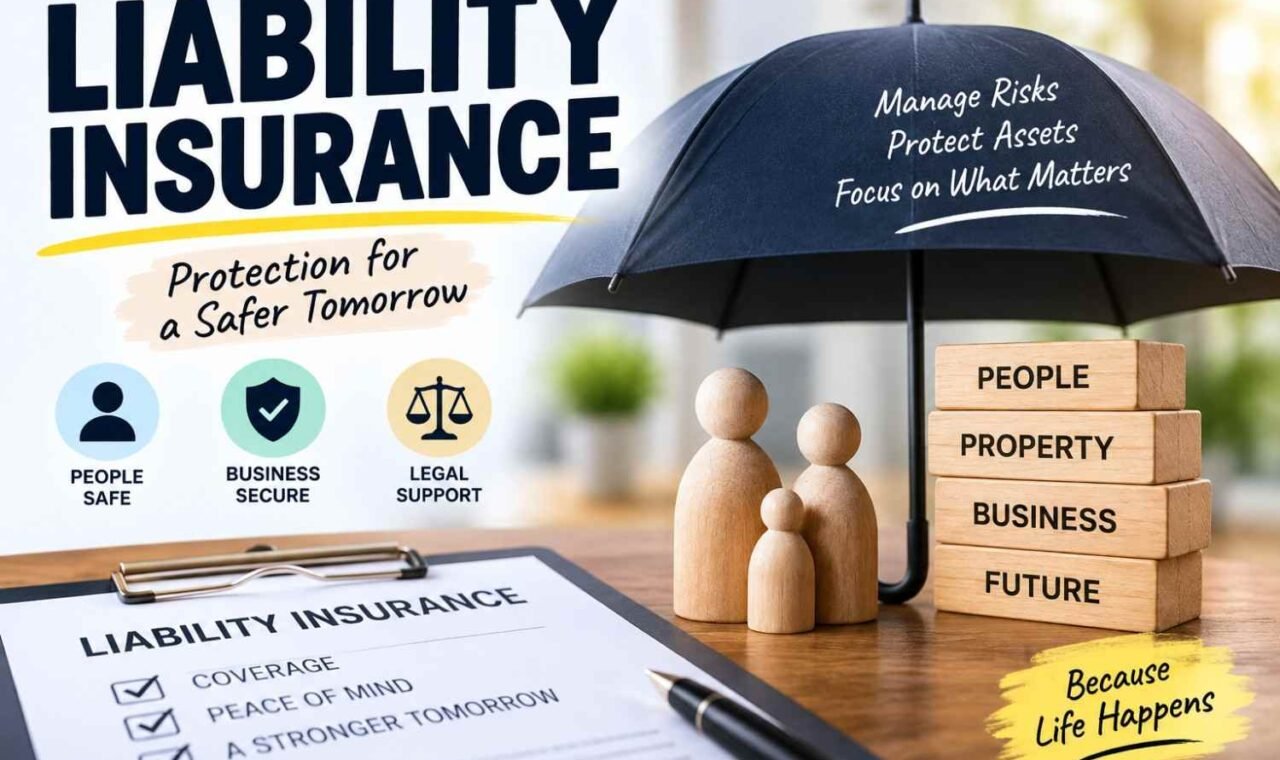
Liability insurance helps when you or your business become legally responsible for harm caused to another person or company. It may pay lawyer costs, compensation, settlement, or court-awarded money, depending on your policy.
But one thing many people miss. Not every liability is covered.
Usually, liability insurance deals with third-party loss, not damage to your own property. So before buying, ask one simple question: what event can create a claim against me?
Your answer decides the right policy.
What Is Liability Insurance?
Liability means you are legally responsible when your action, mistake, or carelessness causes harm or loss to another person. That is the basic liability insurance definition.
Think simple.
You run a shop. A customer slips on wet floor and gets hurt. Now three sides come here:
- You or your business = insured
- Insurance company = insurer
- Customer who got hurt = third party
If the event is covered under your policy, liability insurance may help with legal defence, compensation, or damages you must pay.
This is why we also call it third-party liability insurance in many situations.
One thing people often misunderstand. Liability insurance usually does not repair your own broken shop, laptop, machine, or building. That normally comes under property insurance.
Also, insurance is not a free pass for bad acts. Intentional damage, fraud, or criminal acts are commonly not covered.
So, what does liability mean in insurance? Simple: legal responsibility toward someone else when a covered loss happens.
How Does Liability Insurance Work? Follow One Claim From Accident to Payment
Imagine small café in Hyderabad. Floor just cleaned. No warning board. One customer walks, slips, falls hard. Later medical bill comes. Then maybe legal notice also.
This is where people ask, how does liability insurance work?
Not like instant money machine.
First, accident happens. Customer says café was careless. Business should inform insurer quickly. Then insurer checks the policy.
They may check:
- Was this type of injury covered?
- Was policy active that day?
- Any exclusion stopping the claim?
- Did café follow claim conditions?
- What is the liability insurance limit?
Then investigation starts. CCTV, staff words, medical papers, bills, witness details, all may matter.
If customer sues, legal defence cost may also become important. Some policies treat defence cost inside policy limit. Some may handle it differently. Small wording, big money difference.
One mistake I see people can make: owner becomes scared and says, “Yes, my fault, I will pay everything.”
Better not rush.
Do not admit liability or make private settlement before checking policy rules.
Simple flow is:
Accident → Claim → Insurer Check → Investigation → Defence → Settlement/Court → Covered Payment
And remember, liability insurance claim pays only when the event fits policy cover, conditions and limits. Not every accident means insurer automatically pays.
What Does Liability Insurance Cover—and What Does It Not Cover?
Liability insurance coverage sounds wide, but it is not one big safety net. I always tell people, first read what your policy actually says. A customer falling inside your shop is one thing. Your own machine breaking is very different.
| Usually Covered | Usually Not Covered |
|---|---|
| Third-party bodily injury | Intentional injury or damage |
| Third-party property damage | Criminal or fraudulent acts |
| Some personal or advertising injury | Your own property damage |
| Lawyer and legal defence costs | Professional mistakes under normal CGL |
| Investigation and settlement costs | Employee injuries needing separate cover |
| Covered court-awarded damages | Cyber incidents unless added |
| Certain third-party medical costs | Pollution risks unless specifically covered |
| Product-related liability, if included | Motor, D&O and other separate risks |
For example, a visitor slips on your wet office floor and gets hurt. Medical costs, legal defence and covered compensation may fall under liability insurance, depending on policy wording. Policybazaar lists third-party injury, property damage, investigation, settlement and legal expenses among possible covers.
But suppose your consultant gives wrong professional advice. Ordinary commercial general liability may not pay. Professional indemnity could be needed instead. Pollution, employee injury and vehicle-related claims are also commonly separated from standard CGL cover.
One more trap: contractual liability. If you promise more responsibility inside a contract than normal law puts on you, insurer may refuse that extra part.
So when asking “what does liability insurance cover?”, also ask: “What exactly can make my claim fail?”
Which Type of Liability Insurance Do You Actually Need?
This part confuse many business owners. Because “liability insurance” sounds like one policy. It is not.
The better question is simple: what caused the loss?
If you first find that answer, choosing the right policy become much easier.
| Your risk | Policy to check | Simple example |
|---|---|---|
| Customer gets hurt or property damaged | Public Liability / CGL | Customer slips inside your shop |
| Normal business work causes damage | Commercial General Liability | Contractor damages client property |
| Your advice or service creates financial loss | Professional Indemnity / E&O | Consultant gives wrong advice |
| Your product hurts somebody | Product Liability | Defective product injures buyer |
| Director or officer faces management claim | D&O Insurance | Shareholder alleges wrong decision |
| Data or computer security problem | Cyber Liability | Customer information gets leaked |
| Goods damaged during transport | Carrier Legal Liability | Goods damaged while carrier holds them |
| Claim can go above normal policy limit | Umbrella / Excess Liability | Large claim crosses base cover |
This is how I prefer to look at types of liability insurance in India. Not by remembering names. Look at the accident first.
Suppose one customer enters your restaurant and falls on wet floor. That points more toward public liability or commercial general liability. Tata AIA describes general liability cover around third-party bodily injury, property damage and business operations.
But now change the story.
You are an architect. Your drawing mistake causes a client money loss. Nobody slipped. No product broke. This is a professional work problem. Professional Indemnity or E&O becomes more relevant because such policies deal with claims from errors, omissions or negligence in professional services.
A manufacturer has different fear. Product goes into customer hand, product causes injury. Here you should investigate Product Liability. Current Indian commercial insurance material describes it around injury or property loss caused by supplied products.
For directors, problem again changes. Wrongful management allegations, governance decisions, regulatory claims. D&O is made for that kind of risk, while a cyber policy mainly deals with the cyber loss itself.
So my small rule is this:
Someone physically hurt → start with Public Liability/CGL.
Client loses money from your professional mistake → PI/E&O.
Product causes harm → Product Liability.
Director gets accused over management → D&O.
Data breach or cyber event → Cyber Liability.
And if your business has all these risks? One cheap policy may not solve it. You may need a combination programme. That is why asking “which liability insurance do I need?” is better than only asking for the cheapest business liability insurance.
Public Liability vs General Liability vs Professional Indemnity
These three names look close. But the risk behind each one is not same.
I have seen this confusion many times. A shop owner asks for professional indemnity. A consultant thinks general liability will cover wrong advice. Then later, when claim comes, the real problem starts.
The simple way is this: first ask what caused the loss?
| Question | Public Liability | General Liability / CGL | Professional Indemnity |
|---|---|---|---|
| Main risk | Injury or damage to public | Wider third-party business risk | Mistake in professional work |
| Physical injury | Main focus | Commonly covered | Usually not main risk |
| Wrong advice causing money loss | Usually no | Often limited or excluded | Main purpose |
| Common buyer | Shop, hotel, event business | Contractor, retailer, manufacturer | Doctor, lawyer, architect, consultant |
| Example | Customer falls in restaurant | Contractor damages client property | Engineer gives wrong design advice |
TATA AIG explains that general liability insurance mainly deals with third-party bodily injury, property damage and some advertising or personal injury risks. Professional indemnity, or PI insurance, instead deals with claims from errors, negligence, omissions or wrong professional advice.
Public liability is usually narrower. TATA AIG describes it as protection when business interaction with public causes accidental bodily injury or property damage. CGL can go wider, including premises, operations and product-related exposures depending on policy wording.
So, public liability vs general liability is mostly about width of business risk. General liability vs professional indemnity is more about type of mistake.
If you run an office where customers visit and you give paid expert advice, one policy may not solve everything. You may need both CGL and PI. Check the exclusions, legal defence cover and claim trigger before paying premium. That small reading work can save very big trouble later.
Is Liability Insurance Mandatory in India?
Many business owners ask me one thing first: is liability insurance mandatory in India?
Not for every business. That is important.
But some industries and activities come under special law. The Public Liability Insurance Act, 1991 was made for accidents linked with handling hazardous substances. Its purpose is giving quick relief to people affected by such accidents. Section 4 says certain owners handling hazardous substances must take insurance before starting such handling and keep it renewed.
So, a normal shop, consultant or small office should not simply think this Act makes public liability insurance compulsory for them. Their need may instead come from contracts, client rules, industry risk or business choice.
Recent regulatory update
On 17 December 2024, the Government of India notified the Public Liability Insurance (Amendment) Rules, 2024. The amended rule sets the maximum aggregate insurance amount at ₹250 crore, and up to ₹500 crore where more than one accident happens during the policy period or one year, whichever is less.
My simple rule: first check what your business handles, then law, contract, and policy need. Do not mix statutory public liability with normal CGL or professional indemnity insurance.
How Much Liability Insurance Do You Need?
I don’t like picking liability insurance limit just because ₹1 crore sounds big. Big number can still become small very fast.
Start here:
Possible worst claim + defence cost + contract minimum + asset exposure + repeat incidents = your starting liability limit discussion.
Think about your real business. How many customers enter? What property is around you? Can your product hurt somebody badly? Do you work in India only, or overseas too? Your turnover, employees, old claims, risky work and client contracts also matter.
One thing people miss: ₹1 crore liability insurance does not mean insurer pays ₹1 crore for every accident. A policy can have a per-occurrence limit and also an aggregate limit for the whole policy period. Some policy wordings can also count defence costs inside the limit, so legal bills may reduce money left for damages.
Policybazaar currently shows ₹1 crore cover starting at ₹4,720/year, but its disclaimer ties that example to a specific commercial general liability risk and territory. It is not a normal price for every business.
So when you ask, “Is ₹1 crore liability insurance enough?” don’t start with premium.
Start with the biggest believable loss your business can create.
How Much Does Liability Insurance Cost in India?
There is no one fixed liability insurance cost in India. I seen this confusion many times. One shop owner asks, “What is ₹1 crore liability insurance premium?” Another factory owner ask same thing. But both business risk is not same, so price also cannot be same.
Insurer normally looks at your business type, turnover, employee count, products or services, location, past claims, policy limit and deductible. Hazard work may push premium more. Extra extensions also add cost. Tata AIA says industry, risk level, organisation size, location, operations, products or services, coverage type and claims history can affect liability premium.
For small business, I would not chase lowest price first. Cheap premium may look nice today, but weak cover can hurt when claim comes.
A market signal also showing demand growing. General Insurance Council data published by Statista for FY2025 placed ICICI Lombard first and Tata AIG second among reported insurers by liability gross direct premium.
Mordor Intelligence estimates India’s liability insurance line may grow at 7.84% CAGR from 2026 to 2031. This is market forecast, not government promise.
Best step: take same coverage details to 3–4 insurers, then compare premium, deductible, exclusions and limits together.
Claims-Made vs Occurrence: The Small Policy Detail That Can Create a Big Coverage Gap
This part looks small in policy paper. But it can decide everything.
Say an accident happened on 10 July 2026. Your occurrence policy was active that year. The customer files claim only in 2028. An occurrence policy may still respond because the event happened during the covered policy period, subject to wording, limits and exclusions. Cornell explains occurrence cover in this same way—the event date can matter even when claim comes later.
Claims-made works different.
Maybe you gave wrong professional advice in 2025. Client notices damage later and makes claim in 2027. Now we must check which policy was active when claim came, your retroactive date, and reporting rules.
A few words I always check:
- Retroactive date: older work before this date may sit outside cover.
- Continuous coverage: gaps can create trouble.
- Tail coverage: may give extra time to report certain claims after policy ends. It normally does not create cover for new acts.
- Claims-made-and-reported: claim must be made and reported within the stated time.
So when you ask, “claims made vs occurrence insurance?”, don’t only compare premium. Check dates first. One missed date can become a very expensive lesson.
Before Buying: Use the 12-Point Liability Policy Audit
I never like choosing liability insurance only by premium. Cheap looks nice first. Later one exclusion can make that cheap policy feel very costly.
Before you buy, read the actual policy. Not only brochure.
Use this simple liability insurance checklist:
- Who is insured? Your company only, directors also, employees, partners?
- What work is covered? Your real business activity should match policy description.
- What starts coverage? Accident, claim made, professional mistake, injury?
- Which damages get paid?
- Which exclusions can stop payment?
- What is the per-claim or per-occurrence limit?
- What is the total aggregate limit?
- Do lawyer and defence costs reduce that limit?
- What deductible or self-insured retention you pay first?
- Which country and court jurisdiction is covered?
- Occurrence policy or claims-made policy?
- How fast must you report a claim, and what consent does insurer need?
This is how to compare liability insurance policies properly.
Cornell Legal Information Institute explains that coverage comes from the whole policy—insuring agreement, definitions, declarations, endorsements, exclusions, conditions, deductibles and limits. Being legally responsible does not alone mean insurer must pay.
One point I check twice: defence cost. Some policies pay it beyond limits. Some may reduce your available limit. That small line can matter badly during a large lawsuit. Cornell also notes notice, cooperation and consent-to-settle conditions can affect coverage.
Real-World Cases: Which Policy Would Respond?
Liability insurance looks easy until real trouble comes. Then small details matter a lot.
A customer walks inside your retail shop. Loose wire on floor. He falls, gets hurt, and asks you to pay medical cost. Here, public liability or Commercial General Liability (CGL) may be the policy to check first. Main issue is third-party bodily injury and legal defence.
Now different case. You are software consultant. Your coding mistake, according to client, caused money loss. CGL may not solve this. Professional indemnity or Errors & Omissions insurance is usually more relevant because problem came from your professional work.
Manufacturer case can become scary fast. A product breaks or causes injury after sale. This is where product liability insurance becomes important. One bad batch can create many claims, not just one.
Startup director has different risk. Shareholder says poor management decision caused loss. That is not normal shop liability. Directors and Officers, or D&O insurance, is the policy area to examine.
Home sellers also face strange problems. Maybe online marketplace asks for liability insurance. You think you are only seller, but insurer sees cutting, mixing, repacking, or changing product as manufacturing. Then premium, eligibility, and policy type can change.
So never ask only, “Do I need liability insurance?”
Ask: What exactly can go wrong in my business?
How to Make a Liability Insurance Claim Without Creating Avoidable Problems
When accident happen, first don’t think about insurance form. Protect the injured person, stop more damage, make place safe. Then start proof work.
Take photos. Save CCTV before system deletes it. Write what happened, time, place, people there. Get witness names. Keep invoices, contracts, medical papers, FIR or authority report when needed.
Then notify insurer early. Don’t wait until court notice comes. Claim rules differ by policy, so read your wording for exact notice time. Insurers can ask proof and extra documents while checking a claim.
Your liability insurance claim documents may include:
- claim form and incident report
- photos or video
- third-party letters
- medical or legal papers
- licences and bills
- witness details
- related contract
One mistake I would avoid: making private settlement too fast. Send legal notices to insurer without changing them. Cooperate, keep every email and expense record. Good evidence today can save ugly argument months later.
7 Liability Insurance Mistakes That Can Leave You Paying the Bill
Cheap policy can become costly mistake later. I seen people first checking premium, but not what policy really says.
- Thinking general liability covers your advice. It may cover third-party injury or property damage, but professional error normally needs professional indemnity cover.
- Buying only contract minimum. Your real loss may be much bigger.
- Comparing price, not exclusions. This is where many liability insurance mistakes start.
- Ignoring aggregate limit. One large claim, or many claims, can eat available cover.
- Stopping claims-made cover carelessly. Retroactive date, reporting time and tail cover can matter.
- Not telling insurer your actual business work. Hidden or wrong details can create claim trouble.
- Reporting claim too late. Notice conditions may affect coverage.
Before buying, ask one simple thing: “What exact situation can make my liability insurance claim rejected?” Then read exclusions, limits and reporting rules first. Price comes later.
Liability Insurance Decision Table — What Should You Buy?
Buying liability insurance only by premium can go wrong. I prefer start with one simple question: what kind of loss can hurt your business? Then policy choice becomes little more clear.
| Your situation | First cover to check |
|---|---|
| Shop or restaurant with visitors | Public liability / CGL |
| Contractor at client site | CGL |
| Consultant, accountant, engineer | Professional indemnity |
| Manufacturer, importer, seller | Product liability + CGL |
| Tech company handling customer data | Cyber + CGL/PI |
| Company directors | D&O |
| Transport operator | Carrier legal liability |
| Hazardous-substance business | Statutory PLI + wider liability cover |
| Very large possible claim | Umbrella / excess liability |
One important exception. In India, businesses handling hazardous substances may come under the Public Liability Insurance Act, 1991, which was made for immediate relief after accidents involving hazardous substances.
So don’t think, “Which policy is cheapest?”
Think this way:
Risk → policy type → exclusions → claim trigger → limit → premium → claims process.
Cheap policy is useful only when it covers the loss you are actually worried about.
Liability Insurance FAQs
Is liability insurance mandatory in India?
Not for every business. But some liability cover becomes compulsory under specific laws, contracts, or risky activities. For example, the Public Liability Insurance Act, 1991 applies to certain owners handling hazardous substances in India. Always check your exact business activity before assuming.
What is the simplest meaning of liability insurance?
Liability insurance helps when another person says your business, work, product, or action caused them injury, property damage, or financial loss. If the claim fits your policy, the insurer may help with legal defence and compensation costs.
Who needs liability insurance?
Shop owners, contractors, manufacturers, consultants, doctors, lawyers, IT firms, event businesses, and many small companies may need it. The real question is simple: can your work harm another person, property, money, or reputation?
Does liability insurance cover legal fees?
Often yes, but read the wording carefully. Some policies pay lawyer and court costs separately. In others, defence expenses may reduce your policy limit. This small line matters a lot when a case becomes expensive.
Does liability insurance cover my own property?
Usually no. Liability insurance mainly deals with third-party loss. Damage to your own office, stock, tools, or building generally needs property insurance or another suitable policy.
What is the difference between liability insurance and indemnity insurance?
Liability insurance is the wider idea of protecting against legal claims. Professional indemnity is a specific type, mainly for professionals whose mistake, bad advice, error, or omission causes a client financial loss.
Is public liability the same as general liability?
No. Public liability mainly focuses on injury or property damage involving members of the public. General liability can be wider and may include premises, operations, product risks, advertising injury, and legal defence.
Is professional indemnity the same as general liability?
No. General liability mainly handles physical injury or third-party property damage. Professional indemnity is for errors, negligence, wrong advice, or service mistakes that cause client loss.
How much liability coverage should a small business have?
There is no magic number. Look at your contracts, customer traffic, worst possible injury, property around your work, legal cost risk, turnover, and claim history. I would never choose the limit only because premium looks cheap.
What happens if a claim is higher than my policy limit?
The insurer normally pays only up to the covered policy limit, subject to wording. The remaining amount can become your problem. That is why larger-risk businesses sometimes use umbrella or excess liability cover.
Can liability insurance cover old claims?
Sometimes, yes. It depends strongly on whether the policy is occurrence-based or claims-made, plus the retroactive date and reporting rules. Old incident does not automatically mean covered. Dates must match policy conditions.
Can a liability insurance claim be rejected?
Yes. Late notice, excluded activity, intentional harm, wrong disclosure, uncovered event, exhausted limits, or broken policy conditions can cause trouble. Keep documents, report claims early, and never assume a legal claim automatically means insurance will pay.
Final Takeaway — Don’t Ask Only “Do I Need Liability Insurance?”
Do not start with only, “Do I need liability insurance?” That question too small.
Ask bigger things. What can you become legally responsible for? Who may claim against you? Customer, client, visitor, buyer maybe. Then see what event can create the loss. Injury, bad advice, damaged property, faulty product.
Next check which liability insurance policy actually covers that risk. I always look at exclusions also. This part people skip, then trouble comes later.
Check limits too. Cheap policy means nothing if cover is weak. Get full policy wording. Compare real coverage, not nice marketing names.
Read Next: Income Protection Insurance.
Mortgage protection insurance Guide.





2 comments