
Finding the best dental insurance plans in India look simple first. It is not.
You see “dental cover” on one health plan and may think root canal, filling, crown, implant, all coming under it. But policy can work very different. In India, dental care often comes inside health insurance or OPD cover, not as one big separate dental policy. TATA AIG, for example, currently says some plans cover root canal, tooth filling and extraction, with limits depending on the plan.
So I would not pick policy from company name first.
I check this order:
Your treatment → Is it covered? → Waiting period → Dental limit → Exclusions → Claim method → Premium.
This matters. Digit’s current wording covers things such as X-rays, extraction, fillings and root canal under its OPD dental benefit, but also lists implants, dentures and several other dental works as exclusions except in certain situations.
That small detail can change whole decision.
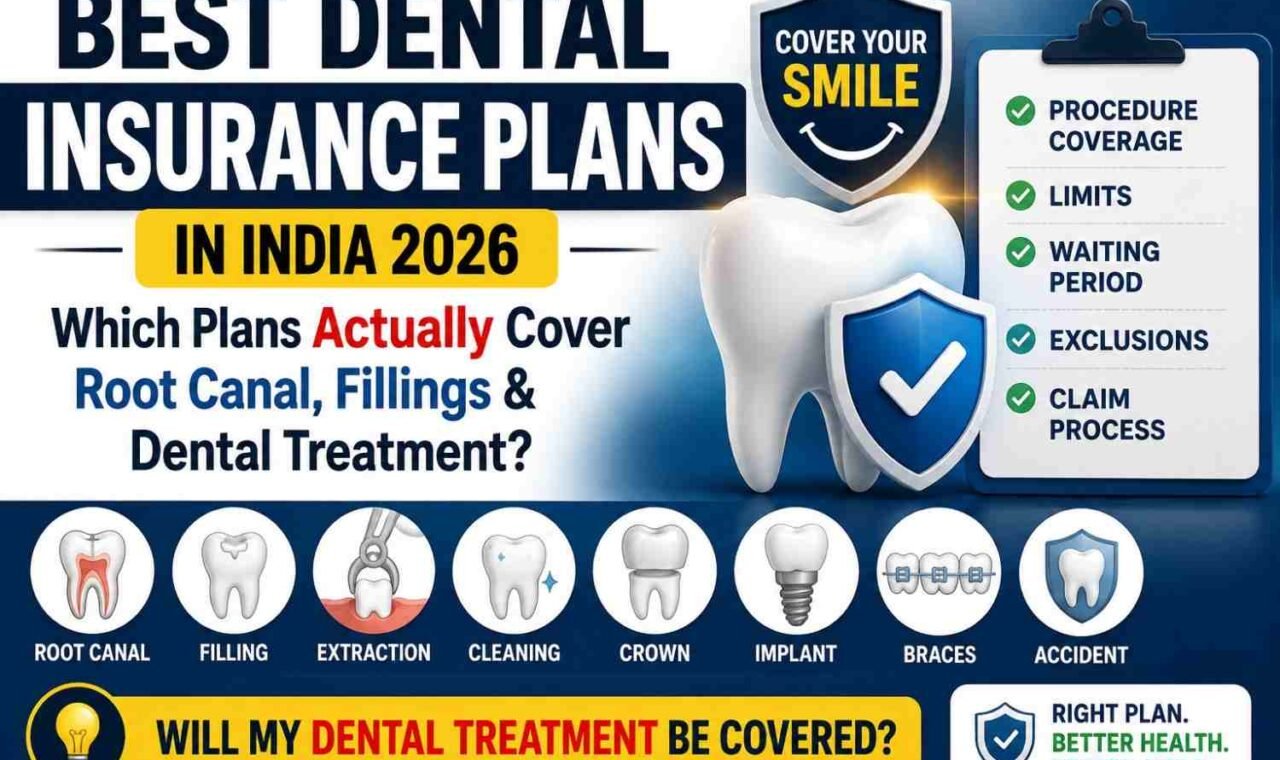
Will My Dental Treatment Be Covered? — Quick Procedure Matrix
Before you buy anything, check the treatment first. This saves many bad surprises later.
| Dental Treatment | Usually Easier to Find Cover? | Main Thing to Verify |
|---|---|---|
| Root canal | Sometimes | Dental OPD wording + waiting period |
| Filling | Sometimes | Filling type + yearly dental limit |
| Extraction | Sometimes | Normal vs surgical extraction |
| Cleaning/scaling | Limited | Preventive/wellness benefit |
| Crown | Restricted | Crown/prosthesis exclusion |
| Implant | Often restricted | Implant/prosthesis exclusion |
| Braces | Often excluded | Orthodontic exclusion |
| Accident-related dental | More commonly possible | Accident rules + medical need |
For example, TATA AIG MediCare Premier says OPD dental care such as root canal, extraction and fillings can be covered after two continuous years, with limits from ₹10,000 to ₹25,000, depending on the sum insured.
But here is where people get confused. Your health policy may be ₹20 lakh or ₹50 lakh. It does not mean your dental bill gets that full amount. Dental may have its own small limit.
I would also never assume one treatment means the whole job is covered. Root canal may qualify, but the crown fitted after it can face another rule or exclusion.
Implants and braces need even more checking. Search the policy wording for implant, prosthesis and orthodontic.
Accident dental is different again. Some policies cover treatment when natural teeth are damaged by an accident, even when normal dental work is limited.
So when asking, “does health insurance cover root canal in India?”, ask one more thing: how much, after how long, and which exact part of treatment?
First Understand How Dental Insurance Actually Works in India
Dental insurance in India can confuse you fast. I also first thought, health policy has big cover, so teeth also covered inside it. Mostly, no.
Standalone dental insurance plans in India are still uncommon. What you usually find is dental cover sitting inside a health or OPD plan.
You may see four different things:
- Dental OPD cover — pays eligible dentist visits or treatments within its limit.
- Preventive dental benefit — may help for check-up, cleaning, scaling or X-ray.
- Accident dental cover — mainly when teeth get damaged because of an accident.
- Dental membership plan — usually gives clinic discounts. This is not same as insurance.
This difference matters. Your normal hospitalization policy may exclude routine dental work done without hospital admission.
Also look deeper. Dental benefit can have its own annual limit, number of visits, waiting period, co-pay and network dentist rule.
Suppose your health insurance is ₹25 lakh. That does not mean you have ₹25 lakh for root canal, filling or extraction. Your actual dental limit can be much smaller. Always find that number first.
Step 1 — Start With the Dental Treatment You Actually Need
Don’t start with insurer name. Start with your tooth problem. This small change saves much confusion, because dental insurance in India may cover one treatment and reject another.
Root Canal
Need a root canal? Check if it is named in policy wording. Then check X-ray and consultation too. Crown can be separate expense, so never assume it comes with root canal cover. Also see waiting period and yearly dental limit.
Filling and Extraction
For filling, check whether amalgam or composite filling is allowed. Ask about repeat fillings and X-rays.
For extraction, things become little messy. Normal tooth removal and impacted wisdom tooth surgery may come under different rules. Hospital treatment can also be treated differently.
Cleaning, Crown and Bridge
Cleaning may sit under preventive dental benefit, with limited visits each year. Crown or bridge needs extra care. Some policies put prosthetic or cosmetic restrictions here.
Implant and Braces
Implants often need very close exclusion checking. Accident-related replacement may follow another rule. Braces can fall under orthodontic exclusion unless medical need is specifically accepted.
Accident
For broken teeth after accident, check the policy’s accident meaning, treatment time limit, and whether dentist or hospital treatment is required.
First find your treatment. Then find the policy that actually pays for it.
Step 2 — Find the Real Dental Limit, Not the Headline Sum Insured
Big number on health insurance can fool us little. You see ₹20 lakh sum insured, and mind says, good, my ₹35,000 dental work is safe. But dental cover may sit inside a much smaller box.
A policy can have three different numbers:
- Base sum insured — main health cover.
- OPD limit — money allowed for outpatient care.
- Dental sub-limit — maximum usable for eligible dental work.
These are not same money.
Say your health policy is ₹20 lakh, OPD benefit ₹25,000, but dental limit only ₹10,000.
| Item | Amount |
|---|---|
| Dental bill | ₹35,000 |
| Eligible dental limit | ₹10,000 |
| Co-pay | 20% |
| Maximum possible insurer payment | ₹8,000 |
| You still pay | ₹27,000 |
So ₹20 lakh headline does not pay this ₹35,000 bill.
I also check whether dental limit is per person or shared by whole family. This matters fast when four people use one floater.
Then comes small words hiding bigger pain: annual limit, once-in-two-years benefit, per-visit cap, deductible, co-pay.
Current TATA AIG MediCare Premier is a good example why we must read limits closely. Its official material says dental OPD limits run from ₹10,000 to ₹25,000 depending on chosen sum insured.
So compare usable dental cover, not shiny policy size.
Step 3 — Check the Waiting Period Before You Buy
Waiting period can turn a nice dental benefit into zero help today.
Suppose your dentist says, “You need root canal.” You go home, buy health insurance with dental cover, then plan claim next month. That may not work.
Some dental benefits need continuous coverage first. TATA AIG MediCare Premier, for example, currently says OPD dental treatment becomes available after two continuous years of coverage. Its brochure lists a 24-month waiting period for OPD dental treatment.
Before paying premium, check four things:
- general waiting period,
- dental-specific waiting period,
- pre-existing condition rules,
- continuous coverage requirement.
The timing of your tooth problem also matters. If pain, decay, X-ray finding, or dentist advice existed before policy start, insurer may check whether that condition was already present.
This is where people get hurt financially. They buy policy thinking future payment means future coverage.
Not always.
If treatment is already advised, buy insurance only after understanding that this existing bill may still remain yours.
Best Dental Insurance Plans in India 2026 — Side-by-Side Comparison
I would not choose a dental insurance plan just because one website puts it at number one. I checked current insurer pages and policy papers again on August 27, 2026. Some old UINs are still floating around online, and that can confuse you badly.
Here is the cleaner picture.
| Plan | Current UIN | Dental benefit | What it clearly covers | Main limit / timing | Claim note |
|---|---|---|---|---|---|
| TATA AIG MediCare Premier | TATHLIP26052V052526 | Inbuilt dental OPD | Root canal, fillings, tooth extraction | Up to ₹10,000–₹25,000 per policy year, based on SI; available after 2 continuous years | Separate dental limit; over base SI |
| Star Comprehensive | SHAHLIP26044V092526 | Inbuilt dental + ophthalmic OPD | Acute treatment to natural teeth | Benefit available after every block of 3 years; amount depends on SI | Network/claim rules apply |
| Digit Health Care Plus | GODHLIP27048V052627 | OPD dental under selected cover | X-rays, extraction, amalgam/composite filling, root canal, prescribed drugs, adolescent teeth alignment | Limit depends on selected policy schedule | Implants, dentures and many prosthetic/cosmetic treatments excluded |
| Generali Central Health Total | GCIHLIP25037V062425 | OPD dental under Superior/Premiere | Mainly dental consultation and diagnostics | Insurer liability limited to 70% of admissible dental consultation/diagnostic bills | Wider dental surgery generally excluded unless policy conditions allow |
TATA AIG is interesting because the current MediCare Premier wording clearly names root canal, filling and extraction, and the dental limit can reach ₹25,000 per policy year. But you need 2 years of continuous cover before this benefit becomes usable.
Star works different. Dental and eye OPD expenses are part of Star Comprehensive, but the current product says this benefit comes after each block of three years. So, not something I would buy today expecting tomorrow’s root canal bill to disappear.
Digit becomes more procedure-specific. Its current Health Care Plus wording lists root canal, fillings and extraction, even adolescent teeth alignment. But implants, dentures, dental prosthesis and many orthodontic procedures are excluded unless special conditions such as acute traumatic injury apply.
Generali Central Health Total is narrower for this purpose. Its current wording gives 70% liability for admissible dental consultation and diagnostics under applicable OPD plans, while normal dental treatment or surgery is generally excluded unless specific policy exceptions apply.
I have not placed Care, Bajaj, Aditya Birla or Chola into this table yet because I could not verify enough current procedure-level wording for this exact 2026 comparison. Better leave a blank than give you an old dental limit.
So, look at your tooth first. Root canal? Filling? Extraction? Implant? Then check limit, waiting, and exclusion. The company name comes later.
Which Plan Is Best for Root Canal, Filling, Extraction and Other Treatments?
I would not choose one dental insurance plan for every tooth problem. That gets risky fast. One policy may help with root canal, but give almost nothing for braces or implant.
Best for Root Canal
For root canal, TATA AIG MediCare Premier is one clear plan to compare. TATA AIG currently says it covers OPD root canal, extraction and filling after 2 continuous years. The annual dental limit can range from ₹10,000 to ₹25,000, based on the base sum insured.
So check the waiting first. If your dentist already saying root canal next month, this benefit may not solve that bill.
Best for Fillings
MediCare Premier again looks useful because fillings are named directly. Still, ask about consultation, X-ray and whether all related charges sit inside same dental cap.
Best for Extractions
Ordinary tooth extraction is also listed by TATA AIG. Wisdom tooth surgery is different matter. I would check whether it is treated as OPD extraction or hospital dental surgery before paying anything.
Best for Preventive Dental Care
Here I become more careful. Star Comprehensive covers outpatient dental treatment to natural teeth up to policy limits, but routine cleaning or scaling should not be assumed without checking current clause.
Best for Crowns and Implants
Do not see “dental covered” and think implant covered too. Crowns, prostheses and implants can get separate limits or exclusions. Ask insurer in writing.
Best for Braces
Braces are orthodontic work. Coverage must say this clearly. No clear wording, I treat it as not covered.
Best for Dental Injury After Accident
Accident dental is another bucket. TATA AIG says hospital dental treatment under anaesthesia needed from accident, injury or illness can be covered.
This is why we choose by treatment first, policy second.
Step 4 — Check Exclusions That Can Stop Your Dental Claim
“Dental covered” looks nice on brochure. But this two words not enough.
Before paying premium, I would open the official policy PDF and search each word: dental, tooth, orthodontic, implant, prosthesis, OPD, waiting period, exclusion. This small work can save big shock later.
Check these first:
- cosmetic dentistry and teeth whitening
- veneers, braces and orthodontics
- implants, dentures, crowns or prostheses
- routine cleaning and preventive care
- pre-existing dental problem
- congenital condition
- treatment not medically needed
- non-prescribed procedure
- treatment outside allowed network
- bill above dental sub-limit
Why this matter? A policy can exclude dental treatment generally, but give some dental benefit under a separate section. TATA AIG MediCare Premier’s current Customer Information Sheet lists “All preventive care; Dental Treatment or Dental Surgery” among medical exclusions and also excludes treatment that is not medically necessary or prescription-supported. So you must read the benefit section together with exclusions, not one line alone.
Star Comprehensive also says dental treatment beyond its specifically provided benefit is excluded unless accidental injury requires hospitalization.
My rule is simple: find your exact procedure by name. Root canal may pass. Implant may fail. A ₹20 lakh policy still cannot push past a small dental limit.
Step 5 — Check Cashless, Network Dentist and Reimbursement Rules
Dental cover looks good on paper. But one question comes later — who pays dentist first, you or insurer?
Cashless means insurer/TPA pays the approved amount directly to a network provider. IRDAI says cashless facility works through empanelled healthcare providers and only up to approved policy limits.
So before sitting in dentist chair, check this:
- Is dental treatment really cashless?
- Must you use a network dentist?
- Can any registered dentist be used for reimbursement?
- Is pre-authorisation needed?
- Must insurer be informed before treatment?
For reimbursement, normally you pay first, then claim under policy rules.
Keep one small file ready: dentist diagnosis, treatment plan, invoice, payment receipt, X-ray/report, claim form, policy/member details, and bank details.
I would check all this before treatment. After ₹20,000 already gone from your pocket, finding one network rule feels very different.
Step 6 — Is Dental Insurance Actually Worth the Extra Premium?
Dental cover looks good on paper. But I would not buy it only because policy showing one more benefit. First I check one simple thing: how much extra I pay, and how much money I can really get back.
Suppose Plan A asks ₹4,000 extra every year for dental cover. Maximum dental benefit is ₹5,000. Then there is waiting period, some treatments excluded, maybe co-pay also. Your real gain can become very small.
Plan B may look different.
| Check | Example B |
|---|---|
| Extra premium | ₹3,000/year |
| Dental limit | ₹15,000 |
| Expected eligible treatment | ₹12,000 |
Here, value can make more sense. Still, ₹15,000 written in brochure does not mean ₹15,000 surely coming to you.
I use this small formula:
Usable Dental Value = Eligible Treatment Cost × Covered Percentage, capped by Dental Limit
Now check the hidden trouble too. Waiting period may stop early claim. Implant or braces may be excluded. A 20% co-pay means some bill stays with you. Benefits may also have yearly or visit limits.
So compare usable dental value against extra premium, not number of features.
And one thing I never compromise: strong hospitalization cover. Saving few thousand rupees on root canal is nice. But choosing weaker main health insurance just for small dental benefit can become costly when a much bigger hospital bill comes.
Which Dental Cover Is Best for Different People?
There is no one best dental insurance plan in India for every person. Your teeth problem decides what cover is useful. I first look at the treatment coming in front of me, not the big policy name.
| Your Situation | What You Should Check First |
|---|---|
| Root canal needed soon | Waiting period + existing problem rules |
| Fillings happen often | OPD dental limit |
| Annual cleaning wanted | Preventive dental benefit |
| Implant needed | Implant clearly covered or not |
| Teen needs braces | Orthodontic cover |
| Senior citizen | Age rules + dental limit + co-pay |
| Family of four | Individual or shared dental limit |
| Frequent travel/risky work | Accident dental cover |
| Rare dentist visits | Premium vs real benefit |
| Wants strong health protection | Hospital cover first |
This part people sometimes miss. A plan can look good for root canal but bad for implant. Another may give cleaning benefit, yet braces stay outside.
If your dental visits are rare, paying much extra premium for a tiny dental limit may not make sense. For a family, shared limits can also finish fast.
So don’t search only “best dental insurance.” Ask, “best dental cover for my treatment?” There is no universal winner because each dental procedure can get different rules, limits, and exclusions.
How to Compare Dental Insurance Plans Yourself in 10 Minutes
Comparing dental insurance plans in India need not become a long headache. I first write what treatment I may need. Root canal? Filling? Extraction? This small step changes whole search.
Then do this check:
- Write your likely dental treatment.
- Ask dentist for rough treatment cost.
- See if that exact procedure is covered.
- Check the waiting period.
- Find the real dental sub-limit.
- Check co-pay or deductible.
- Read exclusions. This part I never skip.
- See network dentist and cashless rules.
- Get an actual premium quote.
- Finally, check the main health insurance policy too.
A ₹20 lakh health cover can look big, but dental limit may be much smaller. That is where people can get surprised.
My simple comparison rule is:
Procedure Covered + Useful Dental Limit + Acceptable Waiting Period + Few Relevant Exclusions + Easy Claim Process + Fair Premium + Strong Core Health Cover = Better Dental Insurance Choice
Don’t buy because “dental cover” written big. Check what money can really come back when your tooth needs treatment.
What If Your Dental Insurance Claim Is Rejected?
A rejected dental insurance claim can feel bad, especially after you already paid dentist bill. But don’t stop at one “rejected” message.
First ask insurer for the written reason and exact policy clause. Then open your policy wording and check that clause yourself. Sometimes issue is simple, maybe missing X-ray, prescription, invoice, treatment note, or claim form.
Keep every paper together: treatment records, bills, prescriptions, emails, claim forms and rejection letter.
If you still feel decision is not matching policy, raise complaint with insurer’s Grievance Redressal Officer. IRDAI says complaints should first go to insurer, normally with supporting documents. If unresolved or answer is not satisfactory, you can use Bima Bharosa; IRDAI says insurer complaints should generally be resolved within 15 days.
Still stuck? Eligible complaints may then go to the Insurance Ombudsman.
Frequently Asked Questions About Dental Insurance in India
Is there standalone dental insurance in India?
Standalone dental insurance is still not common in India. Most dental cover comes inside a health plan, OPD plan, or added benefit. So first see what treatment is covered, not just the word “dental.”
Which health insurance covers root canal treatment?
Some plans do. Star Health says root canal can be payable for accidental injury under stated policy rules, while other plans may cover it under wider dental OPD benefits. Always check waiting time and dental limit first.
Are fillings covered by health insurance?
Sometimes yes. Some policy wording clearly mentions amalgam or composite fillings. But your plan limit can still make the real payment small.
Does dental insurance cover tooth extraction?
It can. Normal extraction, surgical extraction, and accident-related extraction may be treated differently. Read that small clause.
Are dental implants covered?
Often no. Implants and dental prosthesis are common exclusions in many policy wordings. Accident or cancer-linked exceptions may exist in some plans.
Does health insurance cover braces?
Usually not under normal dental benefits. Orthodontic treatment is commonly excluded unless your policy clearly says otherwise.
Is teeth cleaning covered?
Maybe. Scaling can appear in some accidental dental benefits, but routine cleaning should never be assumed covered.
Is dental treatment after an accident covered?
This is where cover is more possible. Star Out Patient Care, for example, covers dental treatment for natural teeth arising from accidents at network facilities.
Can I buy dental insurance after my dentist recommends treatment?
You can buy a policy, but that does not mean the already-known treatment becomes payable. Waiting periods and pre-existing rules may stop that claim.
Can senior citizens get dental cover?
Possibly, but entry age depends on the product. Check age rules plus dental benefit, waiting period and co-pay together.
Is dental insurance cashless in India?
Some benefits use network facilities, while others work by reimbursement. Never assume. Ask before sitting in the dentist chair.
Is dental insurance worth buying in India?
For me, simple test is this: procedure → waiting → limit → exclusion. If your likely treatment passes all four, then compare premium. A ₹20 lakh health plan with only tiny usable dental cover may still not solve your ₹30,000 dental bill.
Conclusion — Choose the Dental Treatment First, Then the Policy
Many people ask, “Which insurer gives dental cover?” I think this starts from wrong side. First look at your teeth problem. Root canal, filling, extraction, cleaning, crown, implant, braces, or accident — each one may get very different cover.
Better question is, “Will this policy pay for my exact treatment, how much can I claim, and when?”
Then check slowly: Eligibility → Waiting Period → Dental Limit → Exclusions → Claim Method → Premium → Core Health Cover.
A big health insurance number means little if your dental bill not payable.
Your dental benefit is useful only when treatment you may really need can be claimed. Choose strong health protection first. Meaningful dental cover should come second.
Read Next: Best Pet insurance in India.





2 comments