
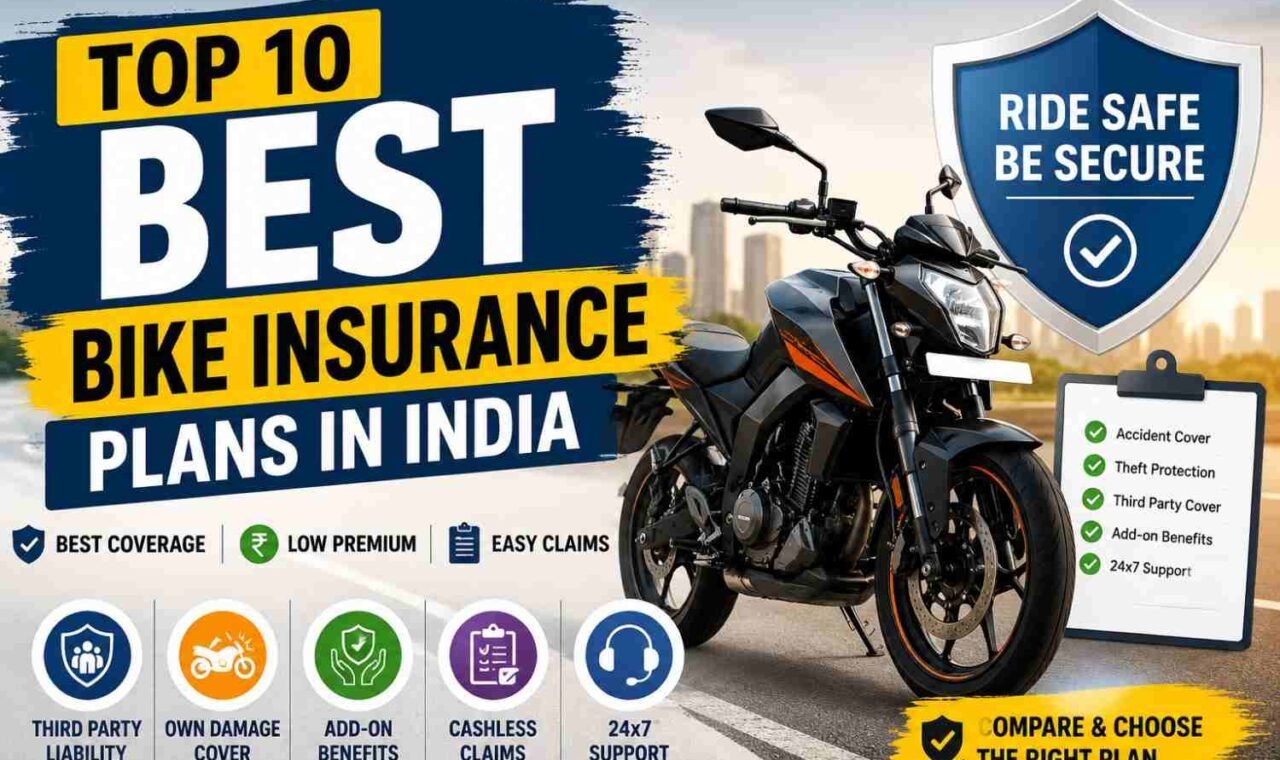
Which bike insurance should you buy? First, don’t run behind lowest price.
Third-party bike insurance is the basic legal cover for bikes running on public roads in India. It pays for covered third-party liability, not damage to your own bike. For your bike also, look at comprehensive/package cover or standalone own-damage cover when valid TP cover already exists.
Zero depreciation is only an add-on. It is not full bike insurance.
I always check one cheap quote twice. Why cheaper? Maybe lower IDV, less cover, or bigger deductible. IRDAI itself says compare these things, not premium alone.
My simple check: Bike → IDV → NCB → Add-ons → Quote → Claim → Winner.
What Is Bike Insurance and What Does It Actually Cover?
Bike insurance is money protection when something bad happen with your two-wheeler. But all policies are not doing same job. I seen many riders saying, “I have insurance, so my bike damage also covered.” Not always. This small confusion can become big bill later.
Third-Party Bike Insurance
Third-party bike insurance mainly protects you against legal liability when your bike causes injury, death, or property damage to another person. In India, third-party liability insurance is mandatory for vehicles using public roads.
But your own broken headlight, damaged tank or stolen bike? Third-party cover normally not paying that.
Own-Damage Insurance
Own damage cover protects your insured bike against covered events such as accident, theft, fire and certain natural events. Exact protection changes by policy. So read policy wording, not only sales page. IRDAI also tells buyers to check what is covered and what is not.
Comprehensive/Package Bike Insurance
Comprehensive bike insurance combines third-party liability + own damage cover.
| Cover | Third Party | Own Bike Damage | Theft | Add-ons |
|---|---|---|---|---|
| Third Party | ✓ | ✗ | ✗ | Limited |
| Standalone OD | ✗* | ✓ | Policy based | Available |
| Comprehensive/Package | ✓ | ✓ | Policy based | Available |
*Standalone OD needs applicable third-party cover separately.
Simple thought: before buying two-wheeler insurance, first ask “Who and what exactly this policy protecting?”
Step 1 — Start With Your Bike, Not the Insurance Company
Many people first search “best bike insurance company”. I think that is little backward.
First look at your bike.
Write down manufacturer, model, exact variant, registration year, RTO, engine capacity and bike age. Keep your RC near you. Also check old insurance policy. Find TP expiry, OD expiry, previous claim, current NCB, and any extra accessories or modification done on bike.
IRDAI also says vehicle details, cubic capacity, vehicle age, previous insurance history, claims and IDV can affect motor insurance pricing.
New Bike vs Old Bike
A ₹2 lakh new motorcycle and 10-year-old daily commuter are different problems.
With newer bike, one costly plastic panel, tank or other part can hurt pocket badly. For an old low-value bike, I would first compare its present value, repair cost and own-damage premium. Buying same cover blindly every year makes no sense.
Your first rough sheet can look like this:
| Check | Your Bike |
|---|---|
| Bike age | ___ |
| Approx value | ₹___ |
| TP expiry | ___ |
| OD expiry | ___ |
| NCB | ___ |
| Previous claim | Yes / No |
The 5-Year Insurance Confusion
This catches many new-bike owners.
You say, “I paid for five-year bike insurance. Why renewal after one year?”
Because five years may refer to Third-Party cover, not five years of Own Damage.
For a new two-wheeler bundled policy, IRDAI’s structure provides 5-year TP cover with 1-year OD cover. So after year one, your TP may still be alive, but protection for damage to your own bike may need renewal separately.
Open your policy schedule. Don’t trust memory. Circle TP expiry and OD expiry separately.
That small check can stop one very expensive surprise.=9iy
Step 2 — Choose the Right IDV Before Comparing Premium
Before looking at ₹1,300 or ₹1,800 premium, look at IDV first. I learned this is where many bike insurance comparisons become wrong.
What Is IDV?
IDV means Insured Declared Value. Simple meaning, it is the value fixed for your insured bike for the policy.
IRDAI says the IDV, or sum insured for own-damage cover, should reflect the bike’s current market value.
So don’t see IDV as some small number hidden inside quote page. It matters.
Why Low IDV Can Make Insurance Look Cheap
See this example.
| Quote | IDV | Premium | First look |
|---|---|---|---|
| A | ₹75,000 | ₹1,350 | Cheapest |
| B | ₹90,000 | ₹1,650 | Middle |
| C | ₹95,000 | ₹1,850 | Costly |
At first, I may click Quote A. You also may.
But wait.
Are these really same insurance offers?
No. IDV itself changed.
IRDAI warns buyers to compare IDV, coverage and deductibles, not premium alone. A cheaper policy can have lower IDV and this can affect claim settlement.
Should You Always Take Maximum IDV?
Not blindly.
Think like this:
real bike value → sensible IDV → premium → theft/total-loss protection
Very low IDV only to save few rupees can hurt later. But unrealistic high IDV also should not become your only target.
I compare quotes only after keeping bike details and IDV close to same.
IDV Mistakes
- Choosing lowest IDV just for cheap premium.
- Comparing different IDVs like they are same quote.
- Forgetting insured accessories.
- Thinking IDV means guaranteed payment for every repair claim.
Best method? Take same bike, same details, similar IDV, then compare insurers. Save screenshots and write the quote date. Now the comparison becomes much more honest.
Step 3 — Check Your NCB Before Buying or Renewing
NCB looks like small word on your bike insurance paper. But check it. I once see people jump to renewal price first, then later notice wrong NCB sitting there.
What Is No Claim Bonus?
No Claim Bonus (NCB) is a reward for claim-free years. It cuts the Own Damage premium, not the third-party premium. IRDAI says current NCB starts at 20% and can rise up to 50% with successive claim-free years.
So before using any bike NCB calculator, open your old policy. See the NCB percentage written there.
Does NCB Belong to the Bike?
No. This part surprises many owners.
NCB belongs to you, the insured person. Not the bike. Sell your bike, NCB does not simply go with buyer. You may use your earned NCB for another vehicle, subject to insurer process.
Can You Transfer NCB to Another Insurer?
Yes. Changing insurer does not mean throwing away your earned NCB. IRDAI says proof may be your renewal notice, expiring policy plus required confirmation, or NCB entitlement letter from previous insurer.
Avoid the Wrong-NCB Trap
Suppose your real NCB is 20%, but quote page shows 50%.
Nice cheap premium. Bad shortcut.
Don’t click pay blindly. Correct it with insurer. Wrong details can create trouble when claim comes.
My simple check: Old policy → NCB → claims made → new quote → match again.
Also save screenshots of old and new NCB. Small proof, sometimes very useful later.
Step 4 — Decide Which Bike Insurance Add-ons You Actually Need
Add-ons look small when buying bike insurance. ₹100 here, ₹200 there. Soon we click many things. But more add-ons not always means better cover. I prefer asking one thing first: what problem can really happen to this bike?
Zero Depreciation
Bike parts lose value with age. During a claim, depreciation may reduce payment on some replaced parts. Zero dep bike insurance can reduce that depreciation effect, subject to policy rules.
For a newer bike, I will seriously check it. For an old bike, first see eligibility and price.
And no, zero dep does not mean every rupee of every repair gets paid. Deductibles, exclusions and claim conditions can still remain. So when somebody asks, “is zero dep worth it?”, my answer is: check bike age, repair cost and actual wording.
Engine Protection
This becomes more interesting if your road gets waterlogged in rains. Engine damage can become very costly. But engine protection is not a promise that every engine failure gets covered. Read what causes are included.
Roadside Assistance
I like RSA more for touring riders, highway use and long daily travel. A dead bike far from home feels very different from a dead bike 2 km from your mechanic.
Consumables, RTI and NCB Protection
Consumables cover may help with smaller repair items that normal claims may not fully pay. Return to Invoice (RTI) is more worth checking for eligible newer bikes, especially around theft or severe loss conditions.
NCB Protection is another trade-off. You pay extra now to protect eligible No Claim Bonus under stated conditions. IRDAI says NCB can range from 20% to 50% of own-damage premium, depending on claim-free history.
| Add-on | Usually worth checking when |
|---|---|
| Zero Dep | Newer bike, costly parts |
| Engine Protect | Flood/waterlogging risk |
| RSA | Touring, highway, long commute |
| Consumables | You want wider repair support |
| RTI | Eligible newer bike |
| NCB Protect | You have valuable NCB |
IRDAI says add-ons extend the base policy for extra premium, and available add-ons differ by insurer. So never buy by add-on name only. Open the actual policy wording. That small reading can save a big argument during claim.
Step 5 — Get Real Bike Insurance Quotes
A bike insurance price showing “starting at ₹___” looks nice. But this number alone tell very little.
Your real bike insurance premium can change with bike model, vehicle age, IDV, previous claims, NCB, deductibles and add-ons you choose. Own Damage price can also differ between insurance companies. IRDAI itself says getting three or more comparison quotes is worthwhile and warns us to compare IDV, coverage and deductibles, not premium alone.
Why “Starting at ₹___” Is Not Enough
Suppose one bike insurance quote is cheaper. Nice? Maybe.
Then you notice IDV is lower. Zero dep missing. Deductible higher.
Now cheap quote not looking so cheap.
I use one simple rule here: make every quote fight on same ground.
Create a Standard Test Bike
Pick your actual bike and keep details unchanged:
Bike → Year → RTO → IDV → NCB → Claim history → Add-ons
Then open at least three insurer websites and request fresh quotes.
Quotes checked: 29 August 2026 — fill with live quotes for your exact bike
| Insurer | IDV | OD Premium | Zero Dep | Engine | RSA | Deductible | Final Premium |
|---|---|---|---|---|---|---|---|
| Quote 1 | — | — | — | — | — | — | — |
| Quote 2 | — | — | — | — | — | — | — |
| Quote 3 | — | — | — | — | — | — | — |
One more thing. Don’t change IDV between quotes just to find cheapest number. IRDAI says IDV should reflect the bike’s current market value. Compare equal cover first. Then price starts making sense.
Top 10 Best Bike Insurance Plans in India
I don’t call one bike insurance “best” just seeing cheap premium. I did this mistake once while comparing. Price looked nice. Then IDV was low, add-ons almost nothing. That changes whole story.
These are 10 bike insurance options worth checking in India now:
| Bike Insurance | Why Check It |
|---|---|
| HDFC ERGO | IDV choice, zero dep, roadside help |
| ICICI Lombard | Comprehensive, OD and online claims |
| Bajaj General | Flexible IDV and add-ons |
| Tata AIG | Several add-ons, online renewal |
| Digit | Digital-first bike insurance |
| ACKO | App-based buying and service |
| SBI General | Package two-wheeler policy |
| IFFCO-TOKIO | TP, comprehensive and cashless garages |
| Reliance General | TP and long-term options |
| New India Assurance | Two-wheeler and standalone OD options |
Current insurer pages confirm these companies continue offering bike/two-wheeler insurance products.
But you should not pick from name only. Take same bike, same IDV, same NCB and same add-ons. Get actual quotes. Then check deductible, zero depreciation rules, nearby cashless garage and claim steps.
That little comparison can save bigger headache later.
Step 6 — Compare What Can Stop or Reduce a Claim
Read Exclusions Before Premium
Cheap bike insurance can look nice on payment page. Claim time is where real meaning comes.
Open policy wording first. Check what is not covered. Normal wear and tear, depreciation, mechanical or electrical breakdown, consequential loss, wrong vehicle use, invalid driving licence, deductibles and add-on limits can affect a claim. Standard motor policy wording also says use outside policy limits or by an unauthorised driver can create claim problems.
I would not buy only by seeing ₹200 or ₹500 saving. That small saving may feel silly later.
Your ₹20,000 Repair Doesn’t Mean ₹20,000 Payment
Suppose accident repair bill is ₹20,000.
| Calculation | Amount |
|---|---|
| Garage bill | ₹20,000 |
| Non-covered items | −₹2,000 |
| Depreciation | −₹3,000 |
| Deductible | −₹500 |
| Example admissible amount | ₹14,500 |
This is only an example, not a fixed claim formula. Your policy decides actual amount. IRDAI also explains that a deductible is the portion above which the claim becomes payable.
Even zero depreciation bike insurance has conditions. Some filed add-on wording limits its use and still keeps applicable deductibles.
Policy Information Must Be Accurate
One more thing. Don’t guess details while buying.
Correct bike use, licence, RC and proposal information matter. IRDAI tells buyers to fill proposal forms carefully and factually, verify documents, and not make false declarations about vehicle use.
Before payment, I would check exclusions first. Premium comes after that.
Step 7 — Understand the Bike Insurance Claim Process Before Buying
Many people check premium first. I check the bike insurance claim steps also. Because cheap policy feeling good today, but after accident you may stand in garage confused, calling people again and again.
Accident Claim
If accident happen, first see safety. Bike can wait.
Simple flow is:
Accident → inform insurer → take photos/videos → garage → survey/approval if needed → repair → documents → settlement
IRDAI says claim papers generally include claim form, RC copy, repair estimate, repair invoice and payment receipt. FIR may also be needed depending on case.
One thing I would not do quickly: repair everything before knowing insurer process. Some insurers arrange survey or inspection before repair approval.
Cashless Bike Insurance Claim
Cashless sounds like you pay nothing. Not always.
You take bike to insurer network garage. Insurer and garage handle approved repair amount between them. But deductible, depreciation or items not covered can still come from your pocket. HDFC ERGO also clearly says applicable deductibles may remain payable by policyholder.
Reimbursement Claim
Maybe your trusted garage is outside network.
Then you may pay repair bill first, keep original papers, and ask insurer for reimbursement under policy rules. This is where missing invoice or payment proof can make headache.
Bike Theft Insurance Claim
Theft feels different. Panic comes first.
Inform police and insurer quickly. FIR, bike keys and later a non-traceable certificate can be required for theft claims.
Keep one claim folder: RC | driving licence | policy | photos | estimate | invoices | payment proof | FIR where needed | claim form | insurer messages.
Before buying, I would compare the actual insurer claim instructions, network garage access and policy wording—not only a big “claim settlement ratio” number.
A useful next section would be “What Can Reduce or Reject Your Bike Insurance Claim?”
What If Your Bike Insurance Claim Is Rejected?
A rejected bike insurance claim feels bad. First thought comes, “Now what I do?” Don’t fight on phone only.
Ask insurer for the rejection reason in writing. Then open your policy wording. Check that exact rule, exclusion, deductible, licence issue, ownership detail, or claim condition they used. Keep RC, policy, photos, repair bills, FIR if needed, emails and claim papers together.
One old Insurance Ombudsman case gives useful warning. A vehicle owner changed RC ownership but insurance stayed in old owner name. Claim rejection was upheld. Small paperwork mistake can become big money problem.
If you feel rejection is wrong:
Written reason → Policy check → Evidence → Insurer grievance officer → Bima Bharosa → Insurance Ombudsman, if eligible.
IRDAI says unresolved or unsatisfactory complaints can be escalated through Bima Bharosa.
The Insurance Ombudsman also accepts eligible complaints after first approaching the insurer.
Bike Insurance Comparison — Which Cover Fits Which Rider?
There is no one best bike insurance for everybody. I learned this after looking at very different bikes. A cheap daily-use bike and a new costly bike, both need different thinking.
Your first question should be simple: what loss will hurt me most?
| Rider | Main Risk | Cover to Evaluate | Add-on to Check |
|---|---|---|---|
| New bike | Costly repair | Comprehensive/OD | Zero Dep |
| Premium bike | Expensive parts | Comprehensive/OD | Zero Dep |
| Old commuter | Lower bike value | TP vs OD cost | RSA |
| Daily city rider | Small accidents | Comprehensive/OD | Zero Dep |
| Highway rider | Breakdown far away | Comprehensive/OD | RSA |
| Flood-risk rider | Water damage | Comprehensive/OD | Engine Protect |
| Claim-free rider | Losing NCB | Comprehensive/OD | NCB Protection |
| Second-hand buyer | Wrong ownership details | Transfer first | Case-specific |
I would not pick insurance only because premium showing ₹200 or ₹500 less. IDV, deductible and actual cover matter too. IRDAI also tells buyers to compare these, not premium alone.
For second-hand bike, be extra careful. Insurance details and ownership should match properly.
So compare your bike, risk, repair cost and riding place first. Then policy. Not reverse.
Bike Insurance Renewal — Don’t Automatically Renew Last Year’s Policy
Renewal message comes. Premium looks okay. We click pay. I used to think this is enough. But bike insurance renewal need little checking first.
Your bike value changed. Your NCB may changed too. Maybe you made claim. Maybe some add-on now useless.
Before bike insurance renewal online, check:
Old IDV → New IDV → NCB → Claims → OD expiry → TP expiry → Add-ons → Deductible → Cashless garages → Fresh quotes → Final premium
Cheap quote can hide lower IDV, less cover, or higher deductible. IRDAI itself tells buyers to compare these points, not premium alone. It also suggests approaching insurer at least 15 days before expiry.
What If Bike Insurance Has Expired?
Don’t think cover continues automatically. Contact insurer first and avoid riding if required insurance has lapsed.
A break in motor insurance may require vehicle inspection and extra cost. IRDAI also warns policyholders not to leave renewal until policy breaks.
Bike Insurance Mistakes That Can Cost You Money
Small mistake looks nothing today. During claim, suddenly big problem.
Common mistakes I keep looking for:
- Choosing only cheapest premium.
- Cutting IDV only to save ₹200 or ₹300.
- Declaring wrong NCB.
- Thinking zero dep means everything paid.
- Buying every add-on without need.
- Ignoring deductible.
- Forgetting OD expiry while TP still running.
- Letting policy expire.
- Not telling insurer about bike modifications.
- Buying used bike but not fixing insurance ownership.
- Starting repair before following insurer claim steps.
- Never reading exclusions.
Another common pressure comes at dealership: “Take insurance from us.”
You don’t have to. IRDAI clearly says there is no compulsion to buy motor insurance through the vehicle dealer. You can compare insurers yourself.
I would spend ten more minutes before payment. Check IDV, NCB, exclusions and claim process. That small work can save much bigger headache later.
Bike Insurance FAQs
Is bike insurance mandatory in India?
Yes. At least third-party bike insurance is required for riding on public roads in India. Own-damage cover is separate protection for your bike.
Which type of bike insurance is best?
No one policy fits everybody. New or costly bikes may need wider own-damage cover. Older low-value bikes need a different cost check.
What is IDV in bike insurance?
IDV means Insured Declared Value. Think of it as insured value of your bike used mainly for theft or total-loss situations.
Should I choose high or low IDV?
Don’t chase either side. I prefer comparing quotes at a realistic IDV. Very low IDV can make premium look attractive.
What is NCB in bike insurance?
NCB is No Claim Bonus, discount linked with claim-free experience on own-damage premium. It can reach 50% under applicable rules.
Can I transfer my NCB to another insurer?
Generally yes. Your earned NCB can continue when switching insurer, subject to proof and policy conditions.
Is zero depreciation bike insurance worth it?
For newer bikes with costly plastic, fibre or metal parts, I would at least compare its price. Read limits first.
Does zero dep mean I pay nothing during a claim?
No. Deductibles, exclusions and uncovered items can still leave some bill with you.
Does bike insurance cover theft?
Own-damage/package policies commonly include theft subject to policy terms. Third-party-only insurance does not protect your own bike against theft.
Does bike insurance cover flood damage?
Covered own-damage policies may protect against flood damage. Engine-related loss can get tricky, so check wording and engine-protect add-on.
Is engine damage covered?
Not every engine failure is covered. Accident damage and consequential engine damage can be treated differently. Read the exact policy wording.
Can I change my bike insurance company during renewal?
Yes. Compare IDV, NCB, add-ons, deductible, garages and final premium before moving.
Can I renew expired bike insurance?
Yes, but a break may require inspection. Don’t assume you have cover during the expired period.
Why does my new bike have five-year insurance?
New two-wheelers may carry long-term third-party cover while own-damage cover follows a different period.
Why did my OD insurance expire after one year?
Because bundled new-bike insurance can have longer TP cover but shorter OD cover. Check both expiry dates separately.
Can a dealer force me to buy their bike insurance?
You can choose an insurer. Don’t buy only because dealer makes insurance sound compulsory from them.
What happens if my bike insurance claim is rejected?
Ask for the rejection reason in writing. Check it against policy wording, collect proof, complain to insurer, then use available grievance channels if unresolved.
Final Decision — How to Choose Bike Insurance in 2026
I never pick bike insurance by price first. Cheap looks nice for few minutes. Claim time may tell another story.
Use this simple path:
Bike → IDV → NCB → Add-ons → Quote → Claim
First, see your bike. New bike, old bike, daily ride, costly parts, all matter.
Then check IDV. Too low can save premium now, but may hurt in theft or total loss case.
Next is NCB. Use only the discount you really earned.
For add-ons, don’t buy everything. Zero dep, engine protect, RSA. Take what matches your real risk.
Now check the quote. Compare same IDV, same cover, same add-ons. Otherwise comparison is almost useless.
Last, study the claim part. Deductible, exclusions, garage network, claim steps. I give this more value than a ₹200 saving.
Winner = right cover + fair IDV + correct NCB + useful add-ons + sensible premium + easier claim process.
So don’t ask only, “Which bike insurance is cheapest?”
Ask, “Which policy can really help me when my bike gets damaged, stolen, or stuck in a bad situation?”
Read Next: Best Business Insurance in India.
Workers Compensation Insurance Guide.





2 comments