
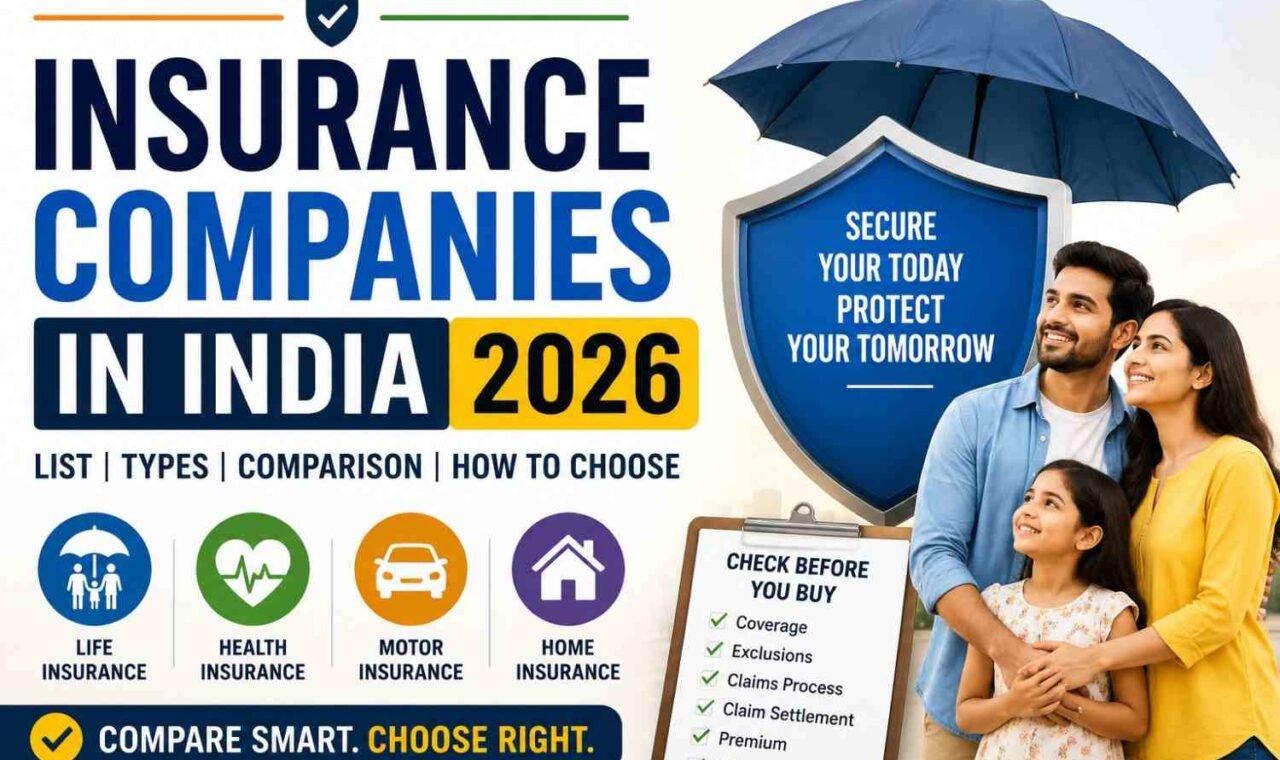
An insurance company takes a premium from you and gives financial cover for risks named in your policy. It may protect your life, health, car, home, travel, or other needs.
In India, insurers mainly fall into three groups:
- Life insurance companies: cover life and long-term money risks.
- General insurance companies: cover motor, travel, home, and other non-life risks.
- Standalone health insurers: focus mainly on medical insurance.
Which is the best insurance company in India?
There is no one best insurance company for everyone. Your best choice depends on your need, cover, age, eligibility, exclusions, waiting period, claim rules, service, complaints, premium, and final policy terms.
Use this path: Need → Coverage → Eligibility → Exclusions → Waiting Period → Claim Terms → Service → Complaints → Premium → Final Policy.
Before you buy, check the insurer on the official IRDAI list; brand name alone is not enough. IRDAI says it protects policyholder interests and regulates insurance companies in India.
Insurer list checked: September 2, 2026.
What Is an Insurance Company and How Does It Work?
Insurance company meaning
An insurance company, also called an insurer, takes money called a premium from you and gives you cover for listed risks. If a covered event happens, you file a claim; the insurer checks your policy and may approve, partly pay, or reject it.
You → Premium → Risk pool → Covered event → Claim → Policy check → Payment decision
How insurance companies make money
Insurance companies collect premiums from many policyholders and place that money into a common risk pool. They use underwriting to price risk, invest part of their funds, pay valid claims, and meet staff and business costs; IRDAI also regulates insurer investments and financial strength in India.
Insurer vs agent vs broker vs aggregator
These names can look similar, but they do different jobs. The insurer carries the insurance risk, while agents, brokers, and web aggregators act as insurance intermediaries under separate rules.
| Entity | What It Does | Provides Insurance? |
|---|---|---|
| Insurance company | Issues the policy and carries risk | Yes |
| Agent | Helps sell policies | No |
| Broker | Helps you compare or choose | No |
| Web aggregator | Helps compare policies online | No |
Key point: You buy a policy from an insurer; an intermediary only helps you reach or compare that insurer.
How Many Types of Insurance Companies Are There in India?
In India, you will mainly see three types of insurance companies: life, general, and standalone health insurers. IRDAI regulates these insurers, so I always check its current list before comparing any company.
Life Insurance Companies
Life insurance protects your family from a major money loss if you die. You can find term insurance, endowment plans, ULIPs, annuities, and pension plans for different life goals.
For example, term insurance can help your family replace lost income. An annuity or pension plan can help you plan income after retirement.
General Insurance Companies
General insurance covers risks other than life. It can include motor, travel, home, marine, commercial, and other non-life insurance.
For example, car insurance may cover an accident, while travel insurance may cover certain trip or medical losses. So, first match the insurance company with the risk you want to cover.
Standalone Health Insurance Companies
Standalone health insurers mainly focus on medical costs. They offer plans for individuals, families, parents, and senior citizens.
| Insurer Type | Main Purpose | Common Products | Typical Buyer |
|---|---|---|---|
| Life | Life and money protection | Term, ULIP, annuity | Individuals, families |
| General | Property and other risks | Motor, travel, home | People, businesses |
| Health | Medical-cost protection | Individual, family, senior plans | Individuals, families |
Key point: Do not ask only, “Which insurance company is best?” First ask, “What risk do I need to insure?” Then compare the right type of insurer.
List of Insurance Companies in India 2026
You have many insurance companies in India, but they do different jobs. So, do not compare a life insurer with a motor or health insurer as if both sell the same cover.
IRDAI keeps separate lists for life, general, and health insurers. Its current life-insurer page lists 26 companies, while the General Insurance Council also keeps a current non-life member directory.
This is a directory of IRDAI-registered insurers, not a ranking from best to worst.
Last verified with IRDAI and current industry sources: September 2, 2026. The IRDAI life-insurer page itself shows a last-update date of May 1, 2026.
Life Insurance Companies
Life insurers mainly sell term cover, savings plans, pension plans, annuities, and other life policies. IRDAI currently lists these 26 life insurance companies.
| Insurance Company | Type | IRDAI Reg. No. | Main Categories | Official Website |
|---|---|---|---|---|
| Life Insurance Corporation of India | Life | 512 | Term, savings, pension | LIC India |
| Axis Max Life Insurance Ltd. | Life | 104 | Term, savings, retirement | Axis Max Life |
| HDFC Life Insurance Co. Ltd. | Life | 101 | Term, savings, pension | HDFC Life |
| ICICI Prudential Life Insurance Co. Ltd. | Life | 105 | Term, ULIP, retirement | ICICI Prudential Life |
| Kotak Mahindra Life Insurance Co. Ltd. | Life | 107 | Term, savings, retirement | Kotak Life |
| Aditya Birla Sun Life Insurance Co. Ltd. | Life | 109 | Term, savings, ULIP | ABSLI |
| Tata AIA Life Insurance Co. Ltd. | Life | 110 | Term, savings, retirement | Tata AIA |
| SBI Life Insurance Co. Ltd. | Life | 111 | Term, savings, pension | SBI Life |
| Bajaj Life Insurance Ltd. | Life | 116 | Term, savings, ULIP | Bajaj Life |
| PNB MetLife India Insurance Co. Ltd. | Life | 117 | Term, savings, retirement | PNB MetLife |
| IndusInd Nippon Life Insurance Co. Ltd. | Life | 121 | Term, savings, retirement | IndusInd Nippon Life |
| Aviva Life Insurance Co. India Ltd. | Life | 122 | Term, savings | Aviva India |
| Sahara India Life Insurance Co. Ltd. | Life | 127 | Life insurance | Sahara Life |
| Shriram Life Insurance Co. Ltd. | Life | 128 | Protection, savings | Shriram Life |
| Bharti Life Insurance Co. Ltd. | Life | 130 | Protection, savings | Bharti Life |
| Generali Central Life Insurance Co. Ltd. | Life | 133 | Term, savings, retirement | Generali Central Life |
| Ageas Federal Life Insurance Co. Ltd. | Life | 135 | Term, savings, retirement | Ageas Federal |
| Canara HSBC Life Insurance Co. Ltd. | Life | 136 | Term, savings, pension | Canara HSBC Life |
| Bandhan Life Insurance Ltd. | Life | 138 | Term, savings | Bandhan Life |
| Pramerica Life Insurance Co. Ltd. | Life | 140 | Term, savings, retirement | Pramerica Life |
| Star Union Dai-ichi Life Insurance Co. Ltd. | Life | 142 | Term, savings, retirement | SUD Life |
| IndiaFirst Life Insurance Co. Ltd. | Life | 143 | Term, savings, retirement | IndiaFirst Life |
| Edelweiss Life Insurance Co. Ltd. | Life | 147 | Term, savings | Edelweiss Life |
| CreditAccess Life Insurance Ltd. | Life | 163 | Life protection | CreditAccess Life |
| ACKO Life Insurance Ltd. | Life | 164 | Term/life protection | ACKO |
| Go Digit Life Insurance Ltd. | Life | 165 | Life protection | Digit Life |
IRDAI also notes that Exide Life merged with HDFC Life on October 14, 2022, so you should not count it as a separate current insurer.
General Insurance Companies
General insurers mainly cover cars, bikes, travel, homes, businesses, accidents, health, and other non-life risks. Recent GI Council records also reflect newer names such as Generali Central, IndusInd General, Magma General, and Zurich Kotak.
| Insurance Company | Type | IRDAI Reg. No. | Main Categories | Official Website |
|---|---|---|---|---|
| ACKO General Insurance Ltd. | General | 157 | Motor, health, travel | ACKO |
| Agriculture Insurance Co. of India Ltd. | Specialised General | 126 | Crop, agriculture | AIC India |
| Bajaj General Insurance Ltd. | General | 113 | Motor, health, travel, home | Bajaj General |
| Cholamandalam MS General Insurance Co. Ltd. | General | 123 | Motor, health, property | Chola MS |
| ECGC Ltd. | Specialised General | 124 | Export credit | ECGC |
| Generali Central Insurance Co. Ltd. | General | 132 | Motor, health, travel, business | Generali Central |
| Go Digit General Insurance Ltd. | General | 158 | Motor, health, travel | Digit |
| HDFC ERGO General Insurance Co. Ltd. | General | 125 | Motor, health, travel, home | HDFC ERGO |
| ICICI Lombard General Insurance Co. Ltd. | General | 115 | Motor, health, travel, business | ICICI Lombard |
| IFFCO Tokio General Insurance Co. Ltd. | General | 106 | Motor, health, travel, business | IFFCO Tokio |
| Kshema General Insurance Ltd. | General | 162 | Agriculture and rural risks | Kshema |
| Liberty General Insurance Ltd. | General | 150 | Motor, health, commercial | Liberty |
| Magma General Insurance Ltd. | General | 149 | Motor, health, commercial | Magma |
| National Insurance Co. Ltd. | Public General | 58 | Motor, health, property | National Insurance |
| Navi General Insurance Ltd. | General | 155 | Health and general insurance | Navi |
| The New India Assurance Co. Ltd. | Public General | 190 | Motor, health, travel, business | New India Assurance |
| The Oriental Insurance Co. Ltd. | Public General | 556 | Motor, health, property | Oriental Insurance |
| Raheja QBE General Insurance Co. Ltd. | General | 141 | Motor, health, commercial | Raheja QBE |
| IndusInd General Insurance Co. Ltd. | General | 103 | Motor, health, travel | IndusInd General |
| Royal Sundaram General Insurance Co. Ltd. | General | 102 | Motor, health, travel | Royal Sundaram |
| SBI General Insurance Co. Ltd. | General | 144 | Motor, health, travel, home | SBI General |
| Shriram General Insurance Co. Ltd. | General | 137 | Motor, personal accident | Shriram General |
| Tata AIG General Insurance Co. Ltd. | General | 108 | Motor, health, travel, business | Tata AIG |
| United India Insurance Co. Ltd. | Public General | 545 | Motor, health, property | United India |
| Universal Sompo General Insurance Co. Ltd. | General | 134 | Motor, health, commercial | Universal Sompo |
| Zuno General Insurance Ltd. | General | 159 | Motor, health, travel | Zuno |
| Zurich Kotak General Insurance Co. Ltd. | General | 152 | Motor, health, business | Zurich Kotak |
For example, Kshema carries IRDAI registration 162, Navi uses 155, Magma uses 149, and IndusInd General uses 103.
Standalone Health Insurance Companies
If your main need is medical cover, check these firms separately. Current industry records show seven standalone health insurers, including the newer Narayana Health and Galaxy Health.
| Insurance Company | Type | IRDAI Reg. No. | Main Categories | Official Website |
|---|---|---|---|---|
| Aditya Birla Health Insurance Co. Ltd. | Health | 153 | Individual, family, health | Aditya Birla Health |
| Care Health Insurance Ltd. | Health | 148 | Individual, family, senior | Care Health |
| ManipalCigna Health Insurance Co. Ltd. | Health | 151 | Individual, family, group | ManipalCigna |
| Niva Bupa Health Insurance Co. Ltd. | Health | 145 | Individual, family, senior | Niva Bupa |
| Star Health & Allied Insurance Co. Ltd. | Health | 129 | Individual, family, senior | Star Health |
| Narayana Health Insurance Ltd. | Health | 166 | Health insurance | Narayana Health |
| Galaxy Health Insurance Co. Ltd. | Health | 167 | Health and wellness cover | Galaxy Health |
The registration numbers also have direct supporting records: Aditya Birla 153, Care 148, ManipalCigna 151, Niva Bupa 145, Star Health 129, Narayana 166, and Galaxy 167.
Key point: use this insurance companies list to make your shortlist, not your final choice. Then compare the actual policy, price, exclusions, claim rules, and cover you need.
Best Insurance Companies in India 2026 — How We Compare Them
A famous insurance company is not always the best one for you. So, I do not rank the best insurance companies in India 2026 only by brand name, ads, or popularity.
Our Comparison Methodology
I compare each insurer by how the policy works in real life. I check coverage, eligibility, exclusions, waiting periods, co-pay, deductibles, sub-limits, claim process, cashless network, premium, and policy wording.
I also check claim data, complaint records, solvency data, and digital service when they apply. Then, I ask one simple question: Does this insurance policy fit your real need and budget?
IRDAI published its Handbook on Indian Insurance Statistics 2024–25 on February 3, 2026. I use such official data before using sales claims or marketing numbers.
Why Claim Settlement Ratio Alone Is Not Enough
A high claim settlement ratio looks good, but it cannot promise that your claim will get paid. Your own policy terms still decide whether your loss is covered, excluded, partly paid, or fully paid.
For example, a health claim may still face a co-pay, deductible, waiting period, or sub-limit. So, I never call an insurer “best” because of one percentage.
EEAT: How We Check Insurers
| Check | What I Use |
|---|---|
| Research date | September 2, 2026 |
| Data period | Latest available official year |
| Sources | IRDAI and insurer documents |
| Policy proof | Policy wording and product details |
| Metrics | Claims, complaints, solvency, cover, cost |
| Limits | Past data cannot promise future claims |
| Ranking | Policy fit + service + value |
Key point: Compare the policy first; compare the company second.
Life Insurance Companies in India — What Should You Compare?
Who needs life insurance?
You need life insurance when someone depends on your income. If you die early, the payout can help your family pay rent, loans, school fees, food, and daily bills.
I would first ask one simple question: how much money will your family need without your salary? Then choose a sum assured that can protect that gap.
What should you compare?
Do not pick the best life insurance company only from one claim number. Check the actual term insurance plan and these points:
- Entry and maturity age
- Sum assured
- Policy term
- Medical tests
- Premium
- Riders
- Exclusions
- Claim documents
- Nomination
- Customer support
For example, HDFC Life Click 2 Protect Supreme Plus allows entry from age 18, while some options allow entry up to age 84; maximum maturity age is 85.
Life insurer comparison
| Insurer | Term Plan | Entry Age | Cover | Riders | FY 2025-26 Claim Metric* | Sample Premium* |
|---|---|---|---|---|---|---|
| LIC | Term plans available | Plan-based | Plan-based | Plan-based | 99.44% | Get live quote |
| HDFC Life | Click 2 Protect Supreme Plus | 18–84** | Flexible | Available | 99.72% | Get live quote |
LIC reported a 99.44% death claim settlement ratio by number for FY 2025-26. HDFC Life reported a 99.72% individual death claim settlement ratio by number for FY 2025-26.
For a fair ₹1 crore term insurance comparison, use the same quote profile: age 30, non-smoker, same policy term, and same payment frequency. Your premium can change with age, health, job, smoking, cover amount, policy term, and medical underwriting.
Sources: insurer disclosures; reporting year FY 2025-26; checked September 2, 2026. Sample premiums should come from same-day insurer quotes, not advertised “starting from” prices.
Key point: Compare the policy first and the company second.
Health Insurance Companies in India — What Should You Compare?
Coverage matters more than the company name
When you compare health insurance companies in India, do not start with the brand name. Start with what the policy will actually pay when you enter a hospital.
Check the sum insured, hospital cover, pre- and post-hospital costs, day-care treatment, room limit, co-pay, deductible, sub-limits, restoration, no-claim benefit, network hospitals, cashless rules, waiting periods, and exclusions. A cheap plan can become costly later if these limits are weak.
For example, Star Family Health Optima currently has a 36-month pre-existing disease waiting period and a 24-month wait for listed diseases. It also applies a 20% mandatory co-pay when a person enters the policy at age 61 or above.
Care Supreme currently lists a 3-year PED wait, a 2-year named-illness wait, 60 days of pre-hospital cover, and 180 days of post-hospital cover. It also offers unlimited automatic recharge, subject to policy terms.
Health insurer comparison table
| Insurer | Example Plan | PED Wait | Room/Co-pay | Cashless | Sample Quote |
|---|---|---|---|---|---|
| HDFC ERGO | Optima Secure | 36 months; options may reduce it | Plan-specific room choice | Available | Get live quote |
| Care Health | Care Supreme | 3 years | Options can change limits | Available | Get live quote |
| Star Health | Family Health Optima | 36 months | 20% co-pay for entry age 61+ | Available | Get live quote |
HDFC ERGO’s current Optima Secure wording also shows PED-wait options of 24 or 12 months, depending on the option selected. Room-cover terms can also change by plan variant.
Use identical test profiles
Compare every insurer with the same city and cover: age 30 individual, family of two adults and one child, age 60 parent, and age 65 senior. This gives you a fair premium comparison.
Ask one final question: “What could make this policy pay less than my hospital bill?” Check co-pay, deductible, exclusions, sub-limits, non-payable expenses, uncovered treatment, and other policy conditions before you buy.
General Insurance Companies — Motor, Travel, Home and More
General insurance companies cover risks other than life. In India, you can use them for your car, bike, trip, home, health, property, and business risks.
Motor Insurance Companies
For your car, first check the cover type: third-party insurance covers legal liability, while comprehensive cover can also protect your own car. Third-party cover is required for vehicles used on public roads in India.
Next, check IDV, deductible, add-ons, cashless garages, and the claim process. For example, HDFC ERGO says it has 12,200+ cashless garages, while ICICI Lombard reported 15,300+ network garages as of July 1, 2026.
Travel Insurance Companies
Do not buy travel insurance only because the premium looks low. Check medical emergency cover, trip cancellation, baggage loss, passport loss, destination limits, age rules, and exclusions.
I would also check the exact country before paying: cover can change by destination and plan. HDFC ERGO, for example, offers individual, family, student, and multi-trip travel options.
Home Insurance Companies
Home insurance can protect your building and household items against covered events. These may include fire, floods, earthquakes, theft, and other listed risks.
But read the exclusions carefully: structure, contents, jewellery, electronics, and burglary cover may have different limits.
Do Not Choose One Insurer for Everything
A good motor insurance company may not give you the best travel or home policy. Compare the actual product, not just the company name.
| Insurer | Motor | Travel | Home | Other Major Covers | Digital Claim | Key Strength | Important Limitation |
|---|---|---|---|---|---|---|---|
| HDFC ERGO | Yes | Yes | Yes | Health, cyber, pet | Yes | 12,200+ cashless garages | Cover varies by plan |
| ICICI Lombard | Yes | Yes | Yes | Health, cyber, business | Yes | 15,300+ network garages* | Check product exclusions |
| Digit | Yes | Yes | Yes | Health, commercial | Yes | Wide online product range | Terms differ by policy |
*ICICI Lombard figure reported as of July 1, 2026. Product availability and benefits can change, so check the latest policy wording before you buy.
Key point: Compare cover → exclusions → deductible → service network → claim steps → premium. The cheapest general insurance company is not always the best one for your risk.
Government vs Private Insurance Companies — Which Is Better?
Government/Public-Sector Insurers
Government insurance companies have served people in India for many years. They often have a wide branch reach, but products, service, and claim support can differ by policy and sales channel.
For example, IRDAI lists LIC among India’s registered life insurers. Its non-life grievance list also covers public-sector insurers such as National Insurance, New India Assurance, Oriental Insurance, and United India Insurance.
Private Insurers
Private insurance companies often focus strongly on online buying, apps, digital service, and quick policy access. Still, a good app does not mean the policy is better for you.
You may also find more product choices across health, motor, life, and other insurance needs. So, compare the real cover and not only the company name.
| Factor | Public-Sector Insurer | Private Insurer | What You Should Check |
|---|---|---|---|
| Regulation | IRDAI regulated | IRDAI regulated | Registration |
| Products | Varies | Varies | Needed cover |
| Premium | Product-specific | Product-specific | Actual quote |
| Claims | Policy-specific | Policy-specific | Terms and process |
| Digital service | Varies | Varies | Service you need |
| Branch access | Varies | Varies | Local access |
IRDAI keeps official lists of registered life and general insurance companies in India. So, you can verify an insurer before you pay any premium.
Government or Private: What Should You Pick?
Do not assume government means safer or private means better. I would first compare the policy wording, cover, exclusions, premium, claim process, and service you will actually use.
Key point: Ownership gives you context; it should not make your final choice.
Claim Settlement Ratio — Can It Tell You Which Company Is Best?
A claim settlement ratio (CSR) can help you check an insurance company, but it should never make the full choice for you. IRDAI’s latest Handbook on Indian Insurance Statistics 2024-25, updated on February 3, 2026, gives official insurance data for comparison.
What Claim Settlement Ratio Means
In simple words, CSR shows how many claims an insurer settled against the claims it handled during a stated period. A higher ratio may look good, but it does not promise your claim will get paid.
Number of Claims vs Amount Paid
Here is where I would look deeper: two insurers can settle many claims, yet the value of claims paid can be very different. So, check the number of claims settled and the amount paid, with the same financial year and metric.
What CSR Cannot Tell You
CSR alone cannot tell you:
- Will your claim qualify?
- Will your full bill get paid?
- Does your policy have a sub-limit or co-pay?
- Is your illness or event excluded?
- Did you disclose all required facts?
| Metric | Tells You | Does Not Tell You |
|---|---|---|
| Claim settlement | Claim outcome signal | Your claim result |
| Complaints | Service warning | Your future experience |
| Solvency | Financial strength | Policy fit |
| Premium | Price | Coverage quality |
Key point: Use CSR as one filter, not the winner. Always check the source, financial year, metric meaning, policy wording, exclusions, and claim rules before choosing an insurance company.
12 Things to Check Before Choosing an Insurance Company
Choosing an insurance company in India should not start with price. First, check what you need, what the policy covers, and what may block a claim.
Insurance-Company Checklist
Before you pay, check these 12 points:
- Is the insurer registered with IRDAI?
- Does it sell the type of insurance you need?
- Are you eligible by age, health, job, car, or other rules?
- What exactly does the policy cover?
- What does the policy exclude?
- Is there any waiting period?
- Do you need to pay a co-pay?
- Are there deductibles or sub-limits?
- How do cashless and reimbursement claims work?
- What do complaint records and public disclosures show?
- What does the actual policy wording say?
- What is your final premium quote after your details are entered?
I would never judge the best insurance company from one number alone. A high claim ratio looks good, but your own claim still depends on your policy terms.
IRDAI’s Bima Bharosa system also lets policyholders raise and track complaints; IRDAI says you should first complain to the insurer and keep written proof.
Do Not Buy Yet
Do not buy only because:
- an ad says “best”;
- premium “starts from ₹X”;
- an agent says every claim gets paid;
- the brand is famous;
- one ratio looks high;
- an influencer recommends it.
Simple Decision Formula
Insurance need + right coverage + acceptable exclusions + affordable premium + clear claim process = better choice.
Why Insurance Claims Get Rejected or Partially Paid
Your insurance claim may get rejected when the loss does not meet the policy rules. It may also get partly paid when limits cut the payable amount.
Common reasons
IRDAI asks buyers to check exclusions, waiting periods, co-pay, deductibles, and sub-limits before buying health insurance. It also says hiding a health problem can cause a claim dispute or rejection.
- You did not disclose an important fact.
- Your treatment falls under a policy exclusion.
- The waiting period is still active.
- Your policy was not active when the event happened.
- The event is not covered.
- Claim papers are missing or wrong.
- A co-pay makes you pay part of the approved claim.
- A deductible comes out before the insurer pays.
- A sub-limit caps payment for a treatment or service.
- You did not meet a policy condition.
Real-world example
Say your hospital bill is ₹5 lakh. The insurer first checks what part of that bill your policy actually covers.
It may remove non-covered costs, then apply a co-pay, deductible, or sub-limit if your policy has one. So, a ₹5 lakh hospital bill does not mean a ₹5 lakh insurance payment.
How to reduce claim problems
Before you buy: read the policy, disclose facts, check limits, and save every document. Renew on time too, because a break in cover can affect a future claim.
During a claim: inform the insurer, keep bills and reports, follow the claim steps, and keep key talks in writing. If a claim is partly or fully rejected, ask for the exact reason and policy clause; such disputes can also fall under the Insurance Ombudsman process.
What to Do If an Insurance Company Rejects Your Claim
Step 1 — Get the rejection reason in writing
Ask the insurer for a rejection letter. It should show the exact policy clause used to reject your claim.
Step 2 — Check your policy wording
Read that clause in your policy. Check dates, exclusions, waiting periods, disclosure rules, and claim terms.
Step 3 — Collect your proof
Keep these records:
- Policy and proposal form
- Claim form
- Bills and medical reports
- Emails or letters
- Rejection letter
Step 4 — Complain to the insurer
Send a written grievance to the insurer’s grievance officer. Keep the complaint number and proof of submission.
Step 5 — Escalate through IRDAI
If the insurer does not fix the issue within 15 days, or you dislike its answer, use IRDAI’s Bima Bharosa system.
Step 6 — Approach the Insurance Ombudsman
You may approach the Insurance Ombudsman after first complaining to the insurer. It can hear eligible disputes up to ₹50 lakh, subject to its rules.
Never pay anyone who promises Bima Bharosa refunds. IRDAI says Bima Bharosa does not ask policyholders for payment.
Best Insurance Company by User Situation
The best insurance company in India 2026 depends on what you want to protect. A good health insurer may not be your best choice for life, car, travel, or home insurance.
| User Situation | Compare First | Main Risk | Verify |
|---|---|---|---|
| Young family | Health cover | Low sum insured | Cover + exclusions |
| Parents | Health | PED waiting period | Policy wording |
| Senior citizen | Health | High co-pay | Co-pay + exclusions |
| Main earning member | Term life | Low cover | Sum assured |
| New car | Motor | Weak cover | IDV + add-ons |
| Old car | Motor | Costly extras | Premium vs benefit |
| Frequent traveller | Travel | Country gaps | Coverage area |
| Homeowner | Home | Underinsurance | Sum insured |
| Budget buyer | Any policy | Choosing by price | Cover vs cost |
| Previous illness | Health | Non-disclosure | Underwriting |
| Claim-focused buyer | Any policy | Trusting CSR alone | Claims + terms |
| Digital-first buyer | Any policy | Trusting the app | Policy wording |
For health insurance, read the Customer Information Sheet before buying. IRDAI says it shows your cover, exclusions, sub-limits, deductibles, waiting periods, claim process, and complaint details.
Also, tell the insurer about past health problems clearly. Current IRDAI guidance says health insurance waiting periods can be up to 36 months; a co-pay means you pay part of an allowed claim.
For car insurance, cheap does not always mean better. IRDAI advises you to compare IDV, deductibles, and coverage, because a lower premium may also give weaker cover.
Final Selection Framework
Use this path: risk → insurance type → cover amount → shortlist insurers → compare benefits → check exclusions → review claims and complaints → get equal quotes → read policy wording → choose.
My rule is simple: choose a policy you can understand, afford, and use during a real claim. Never choose an insurer only because its ad, app, low price, or claim ratio looks impressive.
Frequently Asked Questions About Insurance Companies in India
Which is the best insurance company in India?
There is no one best insurance company for everyone. Choose by your cover need, policy terms, claim service, exclusions, and price for you.
Which insurance company has the highest claim settlement ratio?
For life insurance, compare the same claim metric and year. Axis Max Life reports 99.70% individual death claim settlement for FY 2024-25.
Which insurance companies are registered with IRDAI?
Check IRDAI’s official lists for life, general, and health insurers. Verify the company there before you pay any premium or share details.
Are private insurance companies safe?
Yes, registered private insurers operate under IRDAI rules. Still, read policy wording, exclusions, waiting periods, and claim terms before buying yourself.
Are government insurance companies better?
Not always. Ownership alone does not make a policy better; compare cover, limits, exclusions, service, premium, and your own needs.
Which insurance company is best for health insurance?
Choose a health plan that fits you. Check sum insured, waiting periods, co-pay, room limits, exclusions, network hospitals, and claim rules.
Which insurance company is best for term insurance?
Compare enough life cover, premium, medical checks, policy term, exclusions, and claim history. Your family’s income need should guide your choice.
How do I check if an insurance company is genuine?
Search the insurer’s name on IRDAI’s licensed-entity list. Match the exact company name and official website before making any payment.
Can an insurance company reject my claim?
Yes. An insurer can reject a claim when policy terms are not met, so check the written reason against your actual policy wording.
What should I do after a claim rejection?
Ask for the rejection reason in writing. Then send proof to the insurer’s grievance team and use formal escalation if needed.
Can I change my health insurance company?
Yes, at renewal you can use health insurance portability. IRDAI says eligible waiting-period credits can move from one insurer to another.
Is claim settlement ratio enough to select an insurer?
No. A high ratio helps, but coverage, exclusions, claim rules, premium, service, and policy wording still matter just as much over time, carefully.
Conclusion — How to Choose an Insurance Company in 2026
In 2026, choose an insurance company in India for your own needs, not just its fame. Start with the real risk you want to protect first.
Use this order: Need → Insurance Type → Coverage → Eligibility → Waiting Period → Exclusions → Co-pay/Sub-limits → Claims → Complaints → Premium → Policy Wording → Final Choice. The best insurer offers suitable cover, clear rules, fair costs, and a claim process that works well for you.
Read Next: Commercial Truck Insurance Guide.





2 comments